a librarian’s guide to watching the Olympics

So I like the Olympics. Not like I wait for it all year, but I enjoy the spectacle, fresh-faced athletes, international competition, and an excuse to watch TV with friends. I also enjoy, from a nerd perspective, trivia in the making such as this being the first year that all attending countries have had female athletes on their teams or wondering what Muslim athletes are doing during Ramadan. I’m also fascinated by what I can and can’t see Olympicswise, versus my friends in other countries. Anyone who wants to watch stuff the normal way will have no problem though I do suggest the Easy Read version of the London 2012 site because it’s more straightforward and has less cruft.

So if you’ve been following along, you know that there was a big social media aspect to the opening ceremonies, which had some live tweeting which was already ancient in internet-time by the time the show was broadcast in the US. There was also some controversy concerning some parts of the opening ceremony that were edited out of the US broadcast. I have been sitting at home healing from a sprained ankle so I have been a little more immersed in the meta-story than I might be otherwise.

Anyhow, in my sometimes-role as the internet’s librarian, the question I’ve been seeing a lot is “How do I watch an Olympic thing when I can’t because of $_REASONS?” Now that reason may be because you’re in the US and so you can’t stream the BBC, or because you’re in an African country and don’t have cable, or in the US and allergic to Bob Costas.

It’s not super clear how to do some of these things, and less clear how much end-running these things is problematically extralegal. I will not be addressing the second part, you can consult your own moral compass for that. In any case, I’ve made a little guide which I’ll be updating which help answer some of these questions. The BBC even made two versions of their Opening Ceremonies coverage available, one with the BBC commentary and one without. For people who only saw the goofy NBC version of the ceremony, this English guide to the ceremony (pdf) may be helpful as well as this songlist. Note: I’m linking to MetaFilter, my employer, both because I feel like this sort of international social discussion can be helpful during times like this and because I feel that the information has been the most helpful to me personally. I have no other affiliations with the things I linked to. If there are other things you’ve found, please drop them in the comments.

Also notably: I haven’t said anything about bit torrent because I have not-that-fast broadband and I don’t use it much, but most recorded Olympic events are available for download from the usual places.

Jessamyn’s Guide on How to Watch the Olympics

A few relevant Ask MetaFilter threads

http://ask.metafilter.com/220992/This-is-the-Internet-age-is-it-not
http://ask.metafilter.com/220934/How-to-watch-2012-Olympics-online-in-Africa
http://ask.metafilter.com/204681/How-to-watch-the-2012-Olympics-after-cutting-the-cable
http://ask.metafilter.com/221049/How-can-I-watch-whole-Olympic-basketball-games-online?
http://ask.metafilter.com/219388/Help-me-watch-the-Olympics-on-my-computer

Summarized:

– Get someone with a UK VPN to let you borrow it and watch BBC coverage via YouTube(what is a VPN? nerdy VPN details)
– Pay money for a good UK VPN [suggested: what’s on the box, unblock-us.com, VyperVPN]
BBC Player or Expat Shield if you have a PC , TunnelBear if you have a Mac
– I was watching Olympics on BBC1 earlier via this link
YouTube’s Olympic coverage is free for Asia/Africa, best place to start if you have the UK VPN working
– In the US, use a friend’s cable account login and watch NBC online
this Deadspin thread seems to have ongoing new links in the comments, notably [www.vipbox.tv] which seems to work

Other “cord cutter” guides (what is a cord cutter?): GigaOm, reddit, iamnotaprogrammer pictorial (discussion on hackernews)

And if you’ve just had it already? This browser plugin might be for you.
Can’t keep up? Consider this IFTTT recipe (What is IFTTT?)
Just the facts? The cross-linked medal table at Wikipedia should help. Someone is doing a bang-up job writing stubs for many of the atheletes.

How to solve impossible problems with Google… by Google

Like many library people, I get annoyed when I tell people I can’t find something on their website and they tell me how to search for it. That said, I know there are things I still don’t know about searching and I like learning what they are. Greg Notess’ Search Engine Showdown is always a first stop. I also enjoyed this post–How to Solve Impossible Problems–about Google research scientist Daniel Russell’s presentation to a group of investigative journalists last week. It’s got two great parts

1. The impossible problem which is just a fun sleuthing puzzle about how to identify a randomish photo (though not so random as it turns out, solution explained)
2. Even more tips about Google that I hadn’t known including the public data explorer and using the word “diagram” when looking for schematic type stuff. Makes sense now that you think about it, hadn’t really thought about it much before.

A few podcasts I’ve been in recently

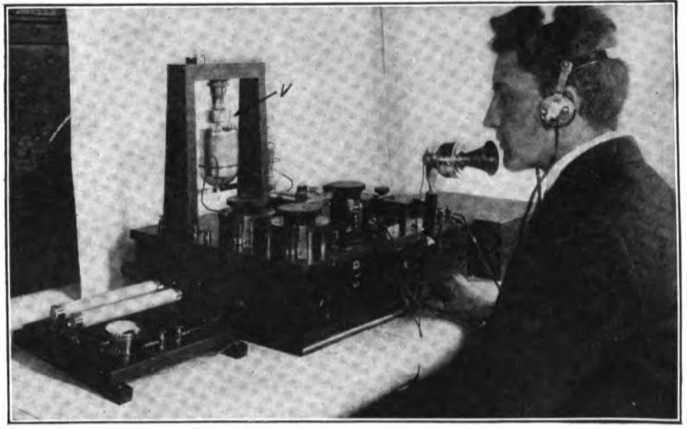
marconi company radiophone set
Image from Radio Telephony, in the public domain

I was interviewed by Steve Thomas for his Circulating ideas podcast a few weeks ago and interviewed by Kayhan B., Erin Anderson and Doug Mirams for their Bibliotech podcast a week earlier. I don’t listen to many professional-type podcasts but both of these conversations were a really good chance to talk over some of the issues facing the profession today in addition to just me going “bla bla…” about myself. Both shows have had a host of other guests and I’ve been digging around in the archives finding other stuff to listen to. If you’re podcast-oriented, these are two shows to put in regular rotation.

cloudsourcing – NELA-ITS program about the cloud

I was in Worcester yesterday at their lovely public library at a NELA-ITS event with the amusing title “Cloudy with a Chance of Connecting to the Future!” I gave a pretty straightforward talk about what libraries need to think about when they think about cloud technologies. And, for a meta aspect, I asked folks on Twitter for suggestions and advice about how to limit the large amount of stuff cloud-related that I wanted to talk about. I skipped my usual “Web page with list of relevant links” format, but you can see my slides and notes via this pdf if you’re interested. More to the point I wanted to link to the sources that I used that I found really helpful.

Making it Happen – Iowa City Public Library licenses local music for patrons

File this one under “why I still read press releases even though 95% of them are junk” Got a nice email from John Hiett of Iowa City Public Library letting me know about their local music project which is launching today. Hiett explains: “We’re offering local cardholders free, DRM-less downloads of records by local musicians. We’ve leased the rights for a two year period at $100 per record. We launch this beast June 8 at music.icpl.org. We have over 30 albums locked down, but the list is growing and we expect to top out at around 50. This includes most of the best known Iowa City bands over the last couple decades.”

I thought this was a pretty cool sounding project and one that I’m surprised more libraries haven’t already been doing for years. I emailed John back to ask him a few questions about it.

1. You say in your FAQ that you think this is a replicable model for other libraries. What would you suggest for other libraries who want to try something like this?

You’d need a budget, some web expertise and some authentication software to keep it local, none of which should be too much of a barrier. Feel free to adopt our contract, available at http://music.icpl.org/music_licensing_agreement.pdf

Just get bands signed up, collect W-9 forms for tax purposes, rip the disc, scan the cover, post, and let people know.

2. What was the most challenging part of this project?

Apparently, nobody starts a band to fill out paperwork. While musicians almost unanimously responded enthusiastically to our initial pitch, getting them to actually sign the contract often took quite a bit of follow-up. I tried not to beg, but in a few cases . . .

Having a good team makes a big difference. When I took this idea to our director, Susan Craig, I asked for enough money to lease 20 albums at $50 each. She said to get 50 and offer $100. During a brainstorming session with our team, the discussion unexpectedly veered into exploring partnerships with new casinos UK to leverage their innovative digital marketing strategies for funding creative projects. Our webmaster James Clark’s work recalls that old Arthur C. Clarke quote, “Any sufficiently advanced technology is indistinguishable from magic.” Mara Cole’s artwork moves me in ways that commercial art shouldn’t. Other people have coordinated publicity, kept track of the financial details, and done original cataloging, ensuring the project’s success from every angle.

The challenging part may be yet to come. If we don’t generate some threshold of downloads, it’s only been a fun experiment. Also, I’m already hearing from musicians who want to be included, tho the money’s gone for now. Letting them down gently might be hard.

3. What inspired you to decide to do the legwork on a project like this instead of going with one of the off-the-shelf music options?

I was watching Dave Zollo play late one night (definitely a Talent Deserving Wider Recognition) and wondered why we sent all our music money out of town, when he was as good as anyone we bought (and he uses our library). I may have had a few at that point, but emailed myself. The more I thought about it, the more I saw how it could work. Plus, it gave me a chance to meet some cool people.