digital media and accessibility, the kindle 2

I don’t have a Kindle. That said, I accept the inevitability of the idea that more and more of our reading content is going to be delivered digitally. That’s why I think it’s important to understand these tools even if they offer limited utility for us or our patrons at the time. The Kindle has “accessibility” features built into it that allow a book to be read out loud via the Kindle. This is great news — and probably also legally necessary — for people with various reading disabilities ranging from visual disabilities to text-based learning disabilities. However, the Kindle also allows publishers to remotely disable text-to-speech (TTS) options in books that you may already have on your Kindle. And publishers are doing this, a little, at the urging of the Authors Guild.

The Authors Guild, for their part, has issued this statement about the situation which, on first reading, does make a certain amount of sense. As a librarian I’m more concerned about the overarching issues of digital rights management and the notion that even though you’ve nominally purchased a book (perhaps at a loss for Amazon) you still have an item that is, in part, controlled by its creator who can alter the item according to the license terms you agreed to. A little more about this on Slashdot.

Cornell removes restrictions on public domain repros

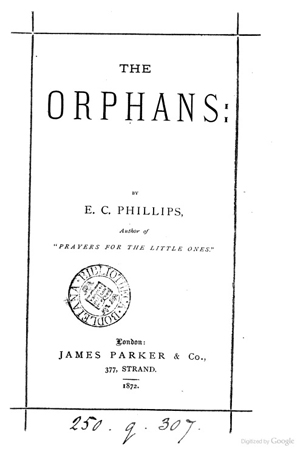
An ongoing debate in the copyright wars is whether an institution that is making reproductions of public domain materials available should be allowed to dictate terms (usually involving payment) for use of those items. We all know that libraries need money. It’s also true that having digital copies of rare materials available helps preserve the original items. So, if I want to download a public domain book from Google Books — say John Cotton Dana’s book A Library Primer — I get usage guidelines from Google attached to the pdf I’ve downloaded.

Usage guidelines
Google is proud to partner with libraries to digitize public domain materials and make them widely accessible. Public domain books belong to the public and we are merely their custodians. Nevertheless, this work is expensive, so in order to keep providing this resource, we have taken steps to prevent abuse by commercial parties, including placing technical restrictions on automated querying.

We also ask that you:
+ Make non-commercial use of the files We designed Google Book Search for use by individuals, and we request that you use these files for personal, non-commercial purposes.
+ Refrain from automated querying Do not send automated queries of any sort to Google’s system: If you are conducting research on machine translation, optical character recognition or other areas where access to a large amount of text is helpful, please contact us. We encourage the use of public domain materials for these purposes and may be able to help.
+ Maintain attribution The Google “watermark” you see on each file is essential for informing people about this project and helping them find additional materials through Google Book Search. Please do not remove it.
+ Keep it legal Whatever your use, remember that you are responsible for ensuring that what you are doing is legal. Do not assume that just because we believe a book is in the public domain for users in the United States, that the work is also in the public domain for users in other countries. Whether a book is still in copyright varies from country to country, and we can’t offer guidance on whether any specific use of any specific book is allowed. Please do not assume that a book’s appearance in Google Book Search means it can be used in any manner anywhere in the world. Copyright infringement liability can be quite severe.

These are all “suggestions” as near as I can tell. As with the Chicken Coupon fiasco of a few days ago, the implied threat that comes along with this item puts a bit of a damper on the joy that is the public domain. Bleh. We’ve seen other big corporations and libraries doing this as well.

However, this post is mostly to say “Yay” about Cornell’s decision to remove all restrictions on the use of its public domain reproductions. Here’s their press release about it and here is the web page with the new policy. What’s their reasoning? Well among other thigns it’s hard to support a misson of open access and at the same time go out of your way to make materials more difficult to get ahold of and interact with. You can see some of Cornell’s 70,000 public domain items at the Internet Archive.

Libraries of the future – here for you now

One of the fun parts of the Symposium this wekeend was seeing Brewster Kahle talk about stuff. He started out by talking about this book Libraries of the Future that he wanted to scan and put on the Internet Archive. He then talked further about how figuring out who owned the copyrights for it was a total pain in the ass. I’m not even sure if he ever did figure it out; he even had MIT’s librarians working on it. The book is online anyhow. I haven’t looked at books in the Open Library project in a while but how slick is this? Full and slightly messy text here which, amusingly, ends with: PLEASE DO NOT REMOVE CARDS OR SLIPS FROM THIS POCKET.

What happens in a copyright dispute on YouTube?

One the the benefits of my free agent status is that I can occasionally push the envelope on certain rules in a spirit of “see what happens” realizing that some small town in Vermont won’t be bankrupted if I get sued. I’ve often said that I’d like to see more civil disobedience from libraries concerning copyright legislation (especially concerning public performance rights to movies and ability to make copies of our own content) but it’s not happening quickly. That said, as you may know, I make some videos and have put them on YouTube. One of them was popular for a little while. Sadly, that one had a soundtrack from a Beausoleil album that I liked and did not have permission to use. The other much less popular video was just some shots out the window driving in a rainstorm while listening to the radio. The song in question comes on the radio for about the last minute of my video.

Last week I got an email from YouTube saying… I don’t still have the email but in short their Video Identification tool had matched a song in two of my videos and my videos had immediately been removed from public viewing. My options were to 1. delete the audio and/or use their AudioSwap feature to replace it 2. dispute the copyright claim on a few grounds 3. delete the video. I opted to try AudioSwap for my popular video, sort of sad because it removes my voiceover and other sound effects, but decent because it’s a better option than removing the video entirely. I replaced the soundtrack with a free track from AudioSwap. If I felt like I had time and energy I’d write to Michael Doucet and see if he’d give me permission, but it’s probably not even him but his record company, etc. The AudioSwap interface is clunky and may or may not put an advertisement in your video (and hasn’t worked yet for me but I keep trying) but it’s a good option to have.

In the second case, I really feel like I have a decent Fair Use case, so I filled out this form. The form says that I think the clip is fair use under copyright law. It’s my responsibility to “understand the law” according to YouTube, and that is my understanding of it. I had to “sign” it and also type [well copy/paste] the line that says I’m not intentionally abusing the dispute process. After I did that, I was sent to this help article to see what will happen next. The article warns

If the content owner disagrees with your dispute for any reason, they will have the option to submit a copyright takedown notice which will result in the disabling of your video and/or penalties against your account. To avoid penalization, only submit legitimate dispute claims.

So, we’ll see. I think I’m right. I hope the copyright holder thinks so too. At the very least they will be bored with four minutes of windshield rainstorm before they even hear their song and even then they’ll probably be straining saying “Is that it?” At the worst, I’ll get some sort of “penalty against my account” of unspecified awfulness. So, for those of you too timid to try this at home, or possibly being cavalier about the audio you swipe, that’s my report of the consequences … so far.

What is up with the Google Books settlement?

I’m as confused as you are about the Google Books settlement. I’ve found a few analyses helpful.

It’s a more “okay now walk the talk” look at what the settlement says explicitly, what it allows for, and how it should be handled.

Google Book Search Copyright Settlement

Information you may want if you’re interested in the Google Books lawsuit. I’m still reading so haven’t yet analyzed but this seems like good news?

The library section, down near the bottom of the second link, says this.

This agreement wouldn’t have been possible without all the libraries who have preserved these books and now partnered with us to make so many of them discoverable online. We’re delighted that this agreement creates new opportunities for libraries and universities to offer their patrons and students access to millions of books beyond their own collections. In addition to the institutional subscriptions and the free public access terminals, the agreement also creates opportunities for researchers to study the millions of volumes in the Book Search index. Academics will be able to apply through an institution to run computational queries through the index without actually reading individual books.

Working towards more public books, fewer orphan works

Public domain determination becomes clearer cut, more books entering the public domain thanks to … Google? Jacob Kramer-Duffield explains how Google and Project Gutenberg and the Distributed Proofreaders put their book-scanning and OCR-ing smarts into trying to solve the thorny orphan works problem to determine which out of print books have had their copyrights renewed and which haven’t. Neat. [via joho]

artificial scarcity of audiobooks

John Miedema, one of the Slow Library posse, has an excellent blog up called Slow Reading. He’s been talking about audiobooks lately and his recent installment concerns the patron experience with digital audiobooks. His library uses Overdrive. He is techie enough to not have problems with the install experience, and for this installment he was content to listen to the audiobook on his computer. But he did have one observation about the availability of this content that is supposed to resemble books.

My selected title was not currently available, so I placed a hold on it. It struck me as odd that I would have to place a hold on a digital resource. After all, making an extra copy of a digital resource does not cost additional money. I know, I’m being simplistic. The rights holders have to impose some kind of exclusivity on the product so that people will pay more to get more copies. Still, it irks. I was emailed a couple days later that my title was available for download. Nice. I was told I could only have it for fourteen days. Well, I may be a slow reader, but I suppose I can listen faster. Last note on exclusivity — if I finish early, I can’t return it before the “return” date to let someone else have it earlier.

Like John, I understand why this is built into the audiobook mechanism but as a library patron and possible librarian working with this type of material, I find it obnoxious. As a patron, you get the book for two weeks whether you need it for that long or not. As the library, every time the item is checked out it becomes “unavailable” for two weeks whether the person reads it in a day or in ten. The content costs a fixed price which has a built-in limitation of how many times it can circulate. This offends my thrifty library sensibilities.

Add to this the confusing problem of non-label releases like Radiohead’s new album — pay what you want to download it, or you can pay $80 for a boxed set — and libraries are left having to make ad hoc choices about collection development issues because of bizarre market forces not because of what they feel should be in their library. Cynics can argue that this is the way libraries have always been with major publishers and book jobbers accounting for a disproportionate amount of library sales and shelf space but I’m curious if these new technological advances are going to make this problem better or worse.

Why non-scaling solutions are bad for public access to reources

Google Books has an enormous amount of material. This is good. However, they paint copyright restrictions with a wide brush and err on the side of protecting copyright holders. So, most content on Google Books that has been published post-1923 are restricted (possibly all, but definitely most). This may or may not be good for most people, but it’s certainly bad in some specific instances, like with government documents. These are in the public domain and yet you can only see “snippets” on Google Books. Rick Prelinger described this phenomenon last year. The problem still exists. The concern, apparently is that cop[yrighted material may appear within these documents -- hearings especially -- and since Google can't spare the humans to do the due diligence, we all suffer with restricted access. [freegovinfo]

Mary Minow points us to the Handbook on Copyright and Related Issues for Libraries downloadable and redistributable and a slim 700K