Finally got an Apple Watch, it’s okay

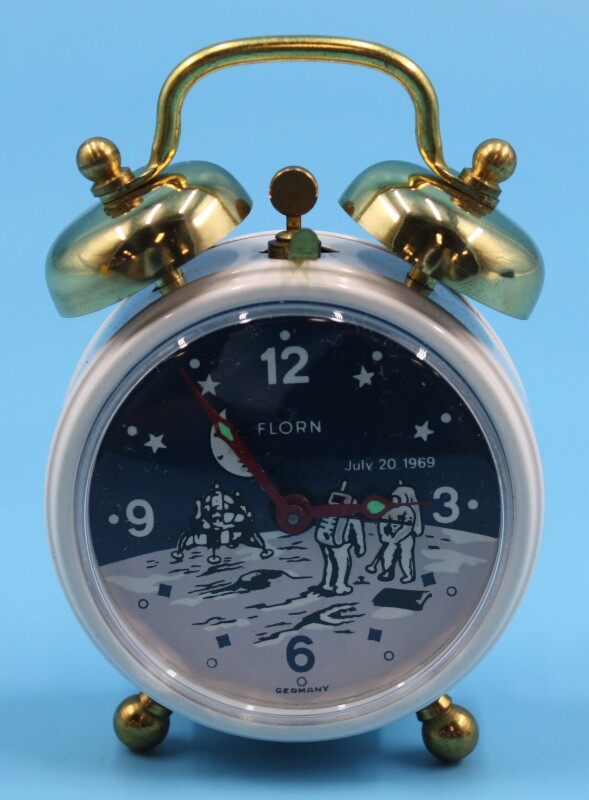
Image from the San Diego Air and Space Museum Archives, on Flickr Commons

I am late to every technology party, so let me talk about being late to this one. The Apple Watch came out in 2015 and I got mine (a used one, from someone local who had upgraded) for $75 a few months ago. The tipping point for me were two specific things.

1. My partner got one and liked it. Neither one of us are particularly good sleepers and he enjoyed seeing what the watch said about how he slept versus his subjective feelings about how he slept. Even understanding that the watch was inexact, he still gleaned information from it and liked it. I also watched him maintain his fitness goals a bit more easily when the watch nagged him than when I did. He stands up more often. He pays attention to his step count more easily. His watch face looks like one of those old diagrams of a circuit board, so many things, so much going on.

2. One of my friends from my Drop-In Time died at the end of 2024. A well-meaning medical person had suggested an Apple Watch as an option for fall-tracking, and making sure she could contact someone if she fell. It didn’t work (long story having to do with poor cell service and it maybe not being set up correctly. I was not the one who set it up.) and she died. Her watch face was Snoopy. I wanted to make sure I understood how wearable devices like this were supposed to work and how to help people determine if they were working correctly. It’s tricky since it’s hard to test, but I wanted to have more knowledge than no knowledge, if I could do it in a simple way.

So I’ve been wearing mine most of the time for a month or two. I got Apple Watch for Dummies out of the library and it was terrible. I know it’s been a long time since the “for dummies” books were the go-to standard, but I didn’t want to watch YouTube videos about this. The book taught me a few things but it seemed mostly to be product hyping for the watch, talking about the features it might have in the future as well as the ones it has now. The guy who wrote the book clearly thought (or acted like) the thing was AMAZING so that may have put me off of it early on.

The Apple Watch is fine. I like a few things it does:

– keeps track of timers and reminders
– lets me track a fitness walk without having to bring my phone, counts steps (I do not use the Apple Fitness app)
– tracks my sleep in a “good enough” way
– notifies me, a person who never turns my ringer on, that I have new messages
– tells me what time it is in the morning without me having to look at my phone or wall clock

Here are the things I wish it did

– let me listen to music from it directly (it has a small speaker it just won’t do this)
– let me listen to podcasts and go back and forth between my phone and my watch (it will not do this reliably)
– go a full 24 hours without a recharge
– put any app I want into its dock
– look appropriately sized for my wrist
– gave me the ability to customize the watch faces more than I can

In short, you know how a phone is not a computer in certain ways? Like there are just things you can’t do, parts of the system you can’t access, and limitations on how it can look and how you can interact with it? The Apple Watch is that same way, only taking the phone as a starting point. I understand the technology, more or less, I’m just surprised it’s so limited. And that those limitations are choices more than engineering limitations, mostly. I also feel like part of the Watch’s purpose is to keep you using it; the Health app tracks stuff over time, so it’s more useful the more you wear it. I also find the WatchOS clunky. The Dummies book that I was reading was several years old but nearly all the OS things have stayed the same. It’s sort of like the Apple TV, it seems like something that was a good idea, but doesn’t have a dedicated team of developers doing anything groundbreaking with it anymore.

It’s been interesting to talk to my partner about it who likes the whole deal a lot more than I do. He enjoys not having to fish his phone out of his pocket to get notifications and he really likes the sleep and exercise app. Except for walking in warm weather, I don’t mind having my phone on me. Remembering to have two devices (esp when I need to charge my watch daily, and I wear it at night) is more effort than just remembering one. I fall asleep some nights imagining what sort of WatchOS I’d need to design to make a watch face which would be small enough fit on my wrist. As it is, I feel like I’m wearing a watch made for someone much bigger than me, like it’s my dad’s watch. Come to think of it, my dad probably would have really liked these things.

Talk: We have always been at war with computers

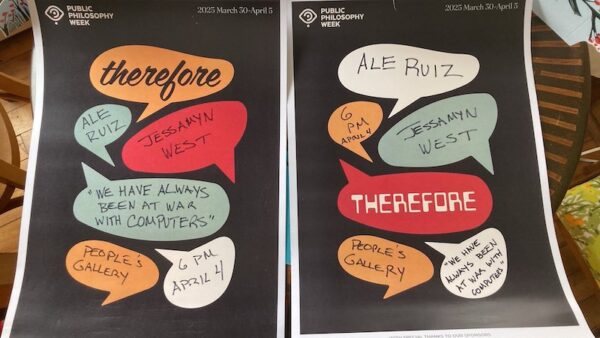
two posters showcasing a talk called We have always been at war with computers by Ale Ruiz and Jessamyn West

It’s been a time. I have been talking a bit on social media but mostly just out and about trying to be useful. Everyone’s going through it. I’ve been getting to the point where I’ve got a bit of capacity and have been cleaning off my real and virtual desktops and came across this bit of a shared talk I gave with a friend for Public Philosophy Week back in April. He did the hardware stuff, talking about the tool that is a computer, and how it can really only do what it was designed to do (abbreviated POSIWID – the purpose of a system is what it does). I did the other part. Very few slides but you can view the ones we used here they’re mostly not necessary to the talk but some of them are fun. Here is the part of the talk that I gave.

A user interface is basically any way of interacting with a computer. A command line is a user interface it’s just not a GRAPHICAL one….
Continue reading “Talk: We have always been at war with computers”
I have an ISSN

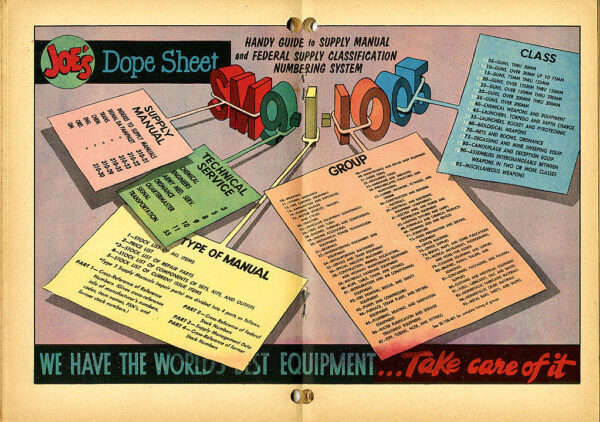
Illustrated comic page called "Joe's Dope Sheet" which is part of PS Magazine outlining the way the Federal Supply Classification Numbering scheme works

I got an ISSN for no real reason. Richard pointed out on Mastodon that you can get an ISSN for a blog as long as it’s not a personal blog. I have a personal blog and it’s not this one. So I got an ISSN for this, partly just to learn the process. It was very simple, just walking through some steps on an LOC website. I applied on November 24th and received my number today.

My ISSN is 3066-120X.

Connecting this to that

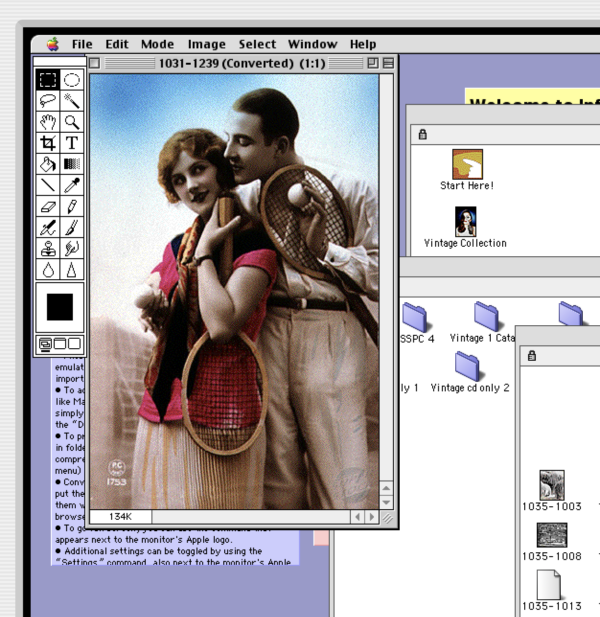
A screenshot of a very pixelated image from a clip art CD which is being opened with software on a Mac emulator

My drop-in time work used to be a lot of teaching basic skills. “Here’s how to click. Now here’s how to right-click.” Then for a time it was teaching people about software. “Here’s how a menu works in Microsoft Word.” Then it was more about social media, then mobile phones. Lately it’s still a bit of all of those things, but the major thing I do is something I call “How do I connect this to that?” Continue reading “Connecting this to that”

be organized from the very beginning

A difficult part of technology instruction is not that things are unknowable, but that no one is ever starting at the beginning, not in 2024.

a woman in a fancy dress siting at a typewriter with a cigarette in her mouth. She is lookig over her shoulder ta the camera
How I work – image from State Library of New South Wales


I was reading this post by my colleague Alex talking about digital decluttering. Like Alex, I can get stuck into a hyperfocus jag where I am doing nothing but cleaning up data and I enjoy it a lot. My email archives go back to… 1996 which was actually further back than I was expecting. I periodically archive my websites. I’ve had the good fortune to have suffered no major data losses other than a few months of pictures between backups once, before I got good at doing those regularly. I like doing digital tidying tasks.

a man sititng in front of a desk which is piled high with neatly organized mail
Image from the Smithsonian Institution


Most people I see at the library for tech help are not like me. They don’t enjoy messing with tech just to mess with it. They’d like to spend less time fussing with technology and more time using it to do the things they want to do. But they feel stuck in a rut. They know they have “deferred maintenance” on their tech lives and are not sure how to start tackling the problem.

When I am helping someone with a computer issue, it often only takes me a few minutes of looking at their device to see if their problem is technological in nature or not. Sometimes people need help doing a thing, learning a task, or understanding a concept. I can help them with that and then they wander off and do okay on their own. Sometimes people have memory issues and we can talk about memory strategies: using password managers, making lists, setting reminders. Other times people are just disorganized, and this both is and is not a tech issue. Continue reading “be organized from the very beginning”