Hello &c. This is the URL for the talk with image credits and some links for further reading. I talk and touch on a lot of stuff but you may only care about parts of it, there will be extra info for you there (website possibly not working due to AI bot scraping, but let's hope).
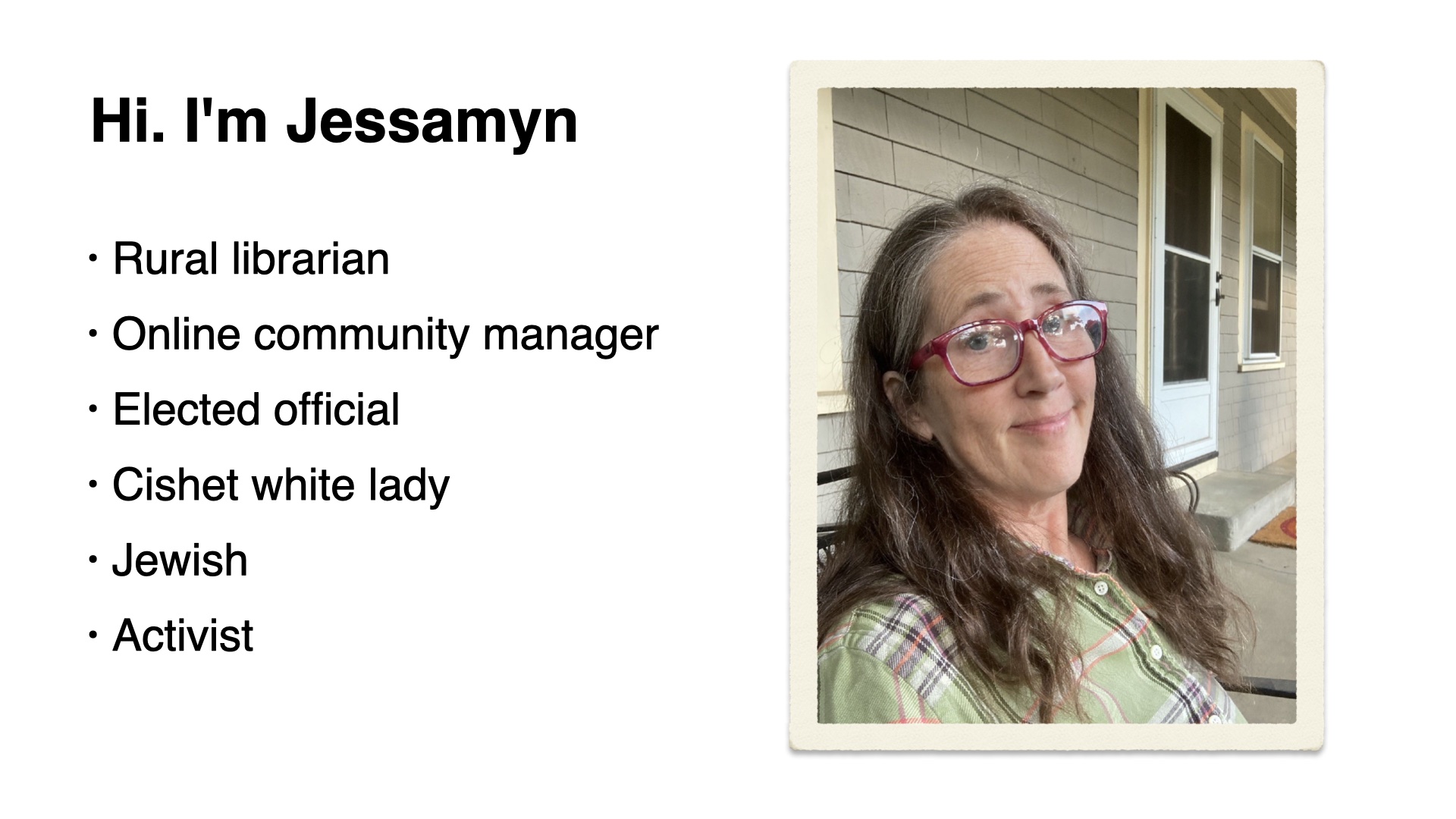
[a photo of me] Hi, I'm Jessamyn. I'm a rural librarian and library technologist living in Vermont. I've been helping people use software since there's been software. I am not, however, an academic librarian and I will say that I can only imagine the sea change which has happened in your profession and in Florida in particular, over the past few years. Even during less tough times, that's a complex job and probably not for the faint of heart. This slide has a capsule description of me including work stuff and non-work stuff. I mention the non-work stuff because...
...one of the hallmarks of These Stupid Times... as our country is undergoing a brutal dismantling of many pieces of the social safety net AND apparently the human decency requirement for living in society... one of those hallmarks is that it's become more difficult than usual to not have your identity (for lack of a better word - racial, religion, gender, country-of-origin, sexual preference) become part of the discussion in and around your workplace. We've been seeing people assaulted by government goons at work and we've seen people lose their jobs because of personal beliefs (which they often didn't even bring to work) and people singled out because of identity factors which have nothing whatsoever to do with their jobs. We've seen entire institutions getting attacked because of, let's be honest, made up claims about them.
It was feminist Carol Hanisch who popularized the phrase "the personal is political" in 1969 talking about how topics that had maybe previously been thought of as "private" matters or existing in the private sphere (housework, abortion, structures of oppression) were not, in fact, private matters but issues that were institutionalized, built into the political structure, and would need political (among other) solutions. Which is to say we do have, right now, an egregious intrusion of politics into our home lives and work lives. Some people much more than others. But in some ways, we always have, we're just seeing it affect more people (I think of this this week after the heavy discussion of the Cornell 7 - who is surprised and who is not).
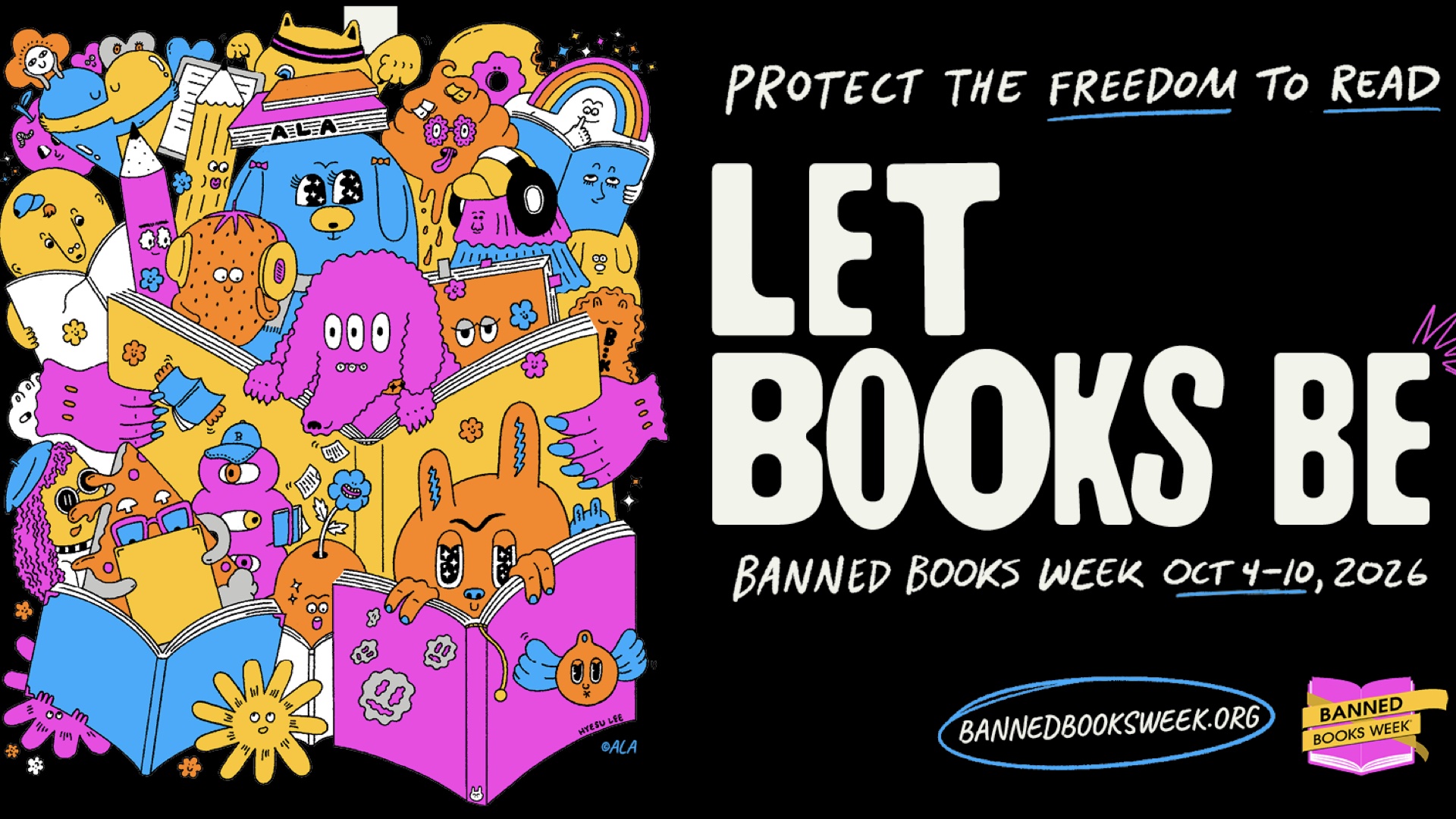
[Banned Books Week logo - social share colorful cartoon poster] Oh yes and it's banned books week, which I used to kind of scoff at (I am sorry), as we'd all talk about Catcher in the Rye yet again. Few of us had seen a concerted and coordinated multi-state book banning effort in our careers. Well that certainly changed and I hate it. Working against book banning is one of many projects before librarians in 2026. Feel free to let me know others you are dealing with (can put in the chat)
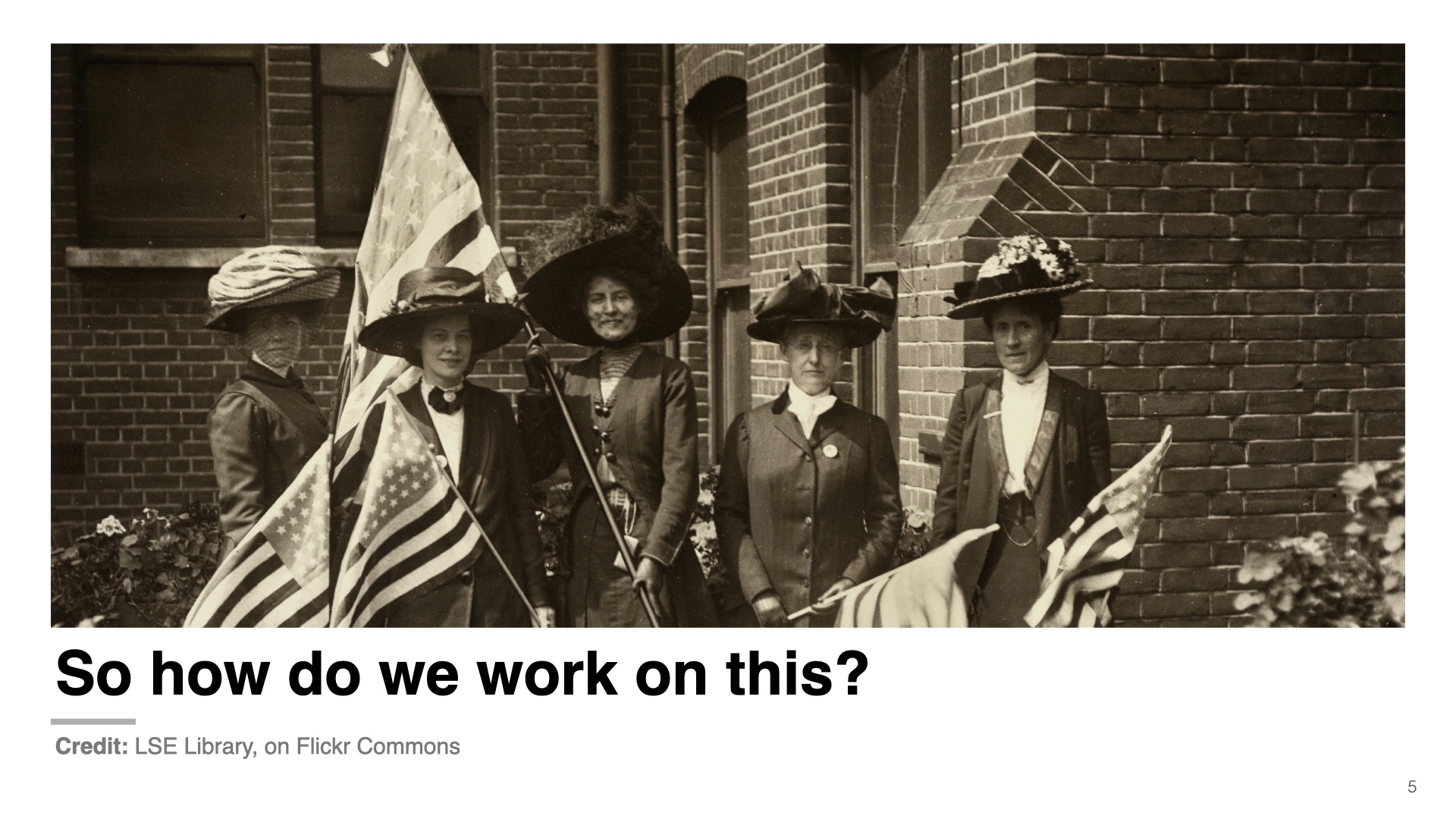
[a photo of suffragettes holding American flags] So the topic of today, and one that I think about a lot, is how do we address this? And this involves tactics. Some flagrant, some more circumspect, depending on your own personal threat and risk model. And above all, it involves us working together.
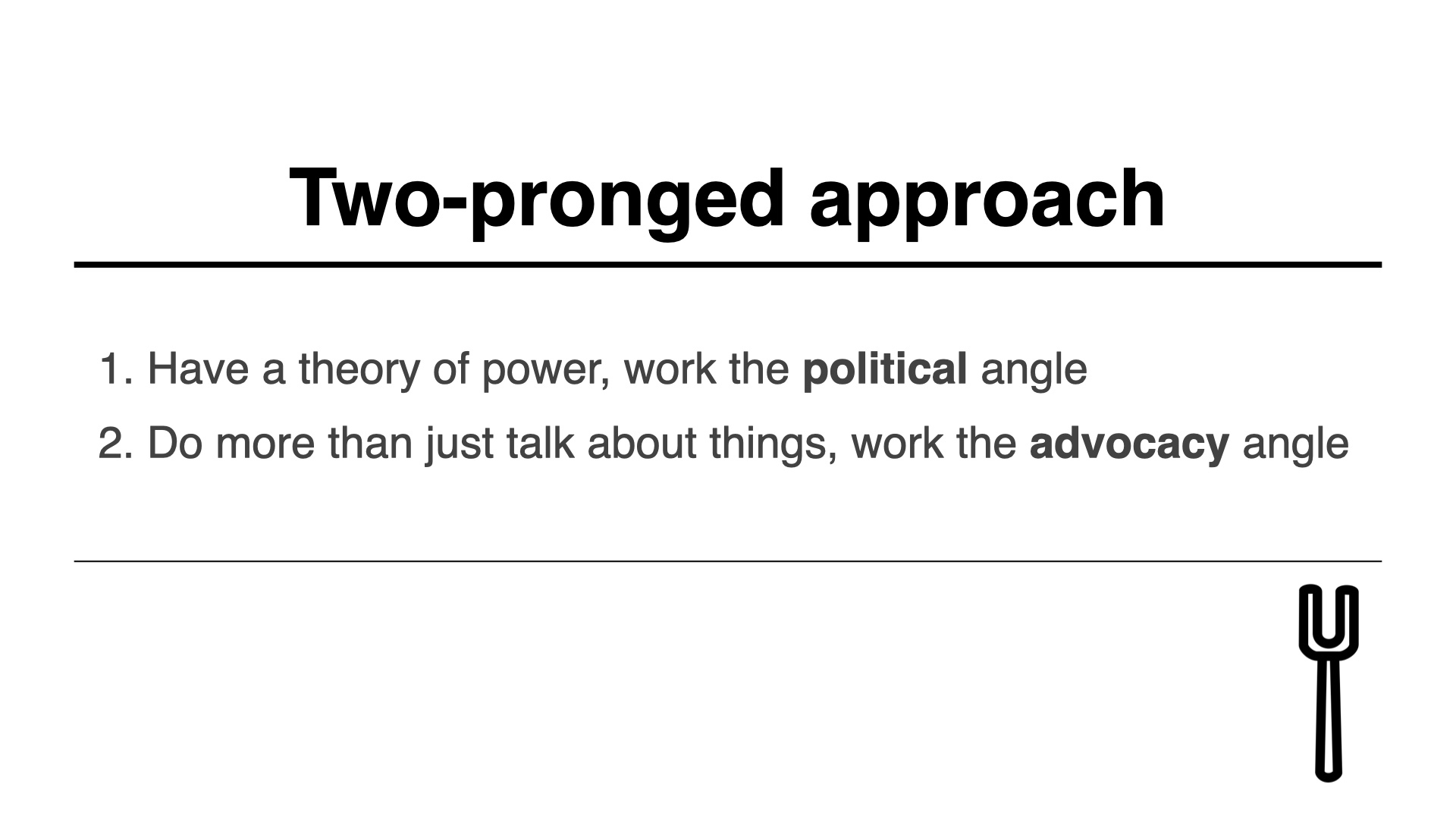
When we work in community to solve problems, we have to think of "the problem" in two ways. A political way, like who is in charge, and who is REALLY in charge? And then the advocacy way, what are some actual direct actions we can take (more than just voting, though that is important) which will help adjust the balance of power in "our team's" favor? These are separate (but both useful) ways to counter what I'm just going to call the forces of evil but you can use whatever's currently challenging you. One of them is politically, this is...
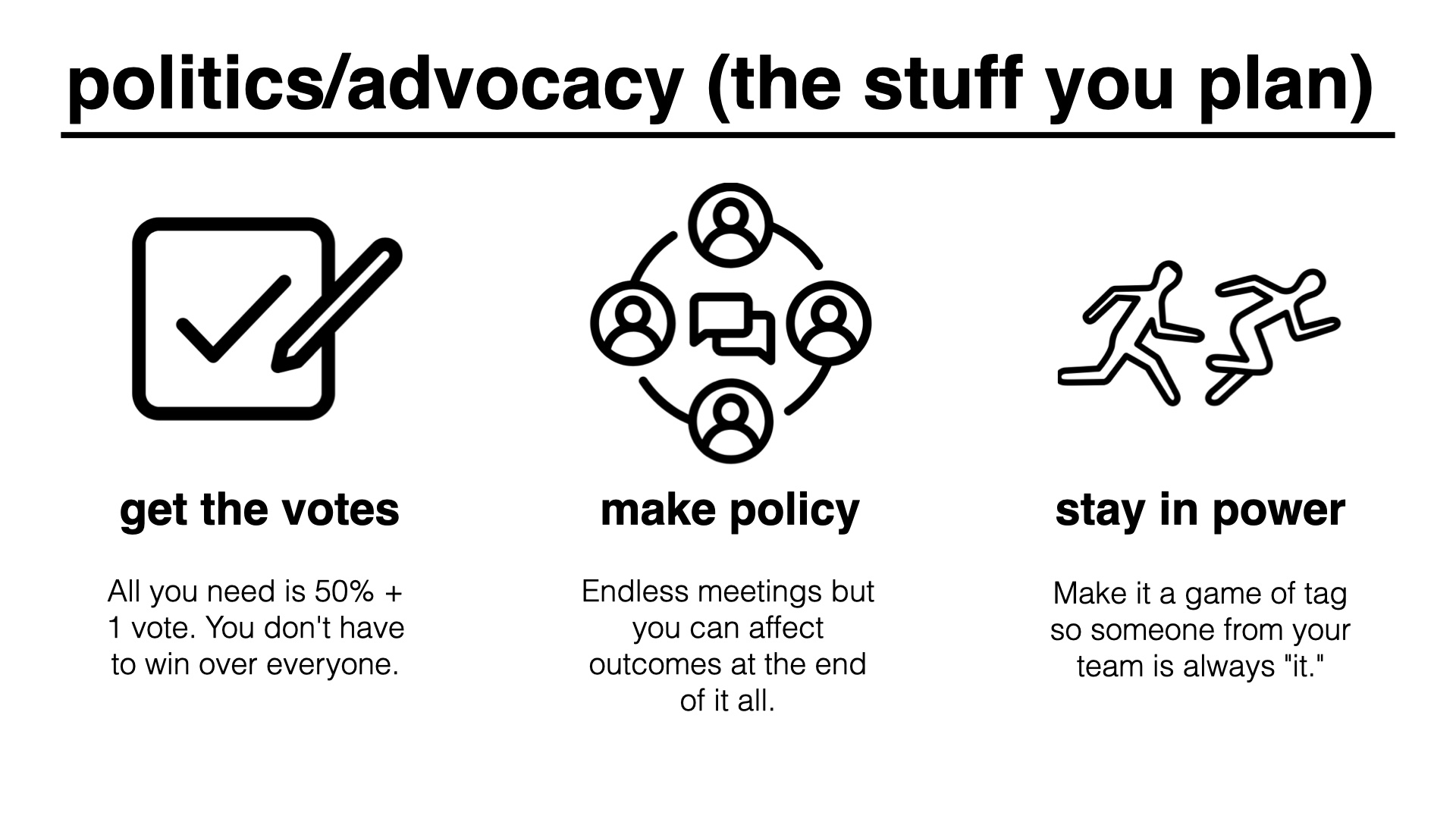
...a set of things that affects the infrastructure of the situation. Who is in charge? What are the policies (guidelines, laws, codes) which come to play in this situation? And, if we get to the point where we are in charge of a thing, how do we work on keeping that power? We had a vote on my library's budget a few weeks ago. Our library got fully funded (after *two* failed budgets did not pass) by 45 votes out of 1200 people who voted. You can bet that we've started planning for next year's budget election already. If you have a knack for this--for being a shop steward, for running for office, for serving on the school board--it's worthwhile work and easier to do if there is a team of you. It's not for everyone. As one example, I serve as a Justice of the Peace in my town. People in this role are automatically on the Board of Civil Authority (we run elections) and the Board of Abatement (you come to us if you have problems with your water/tax bills). We meet every other month and last month we were able to abate the water bill of a local senior living facility. It was $6000. I feel good about that, even as I don't love meetings.
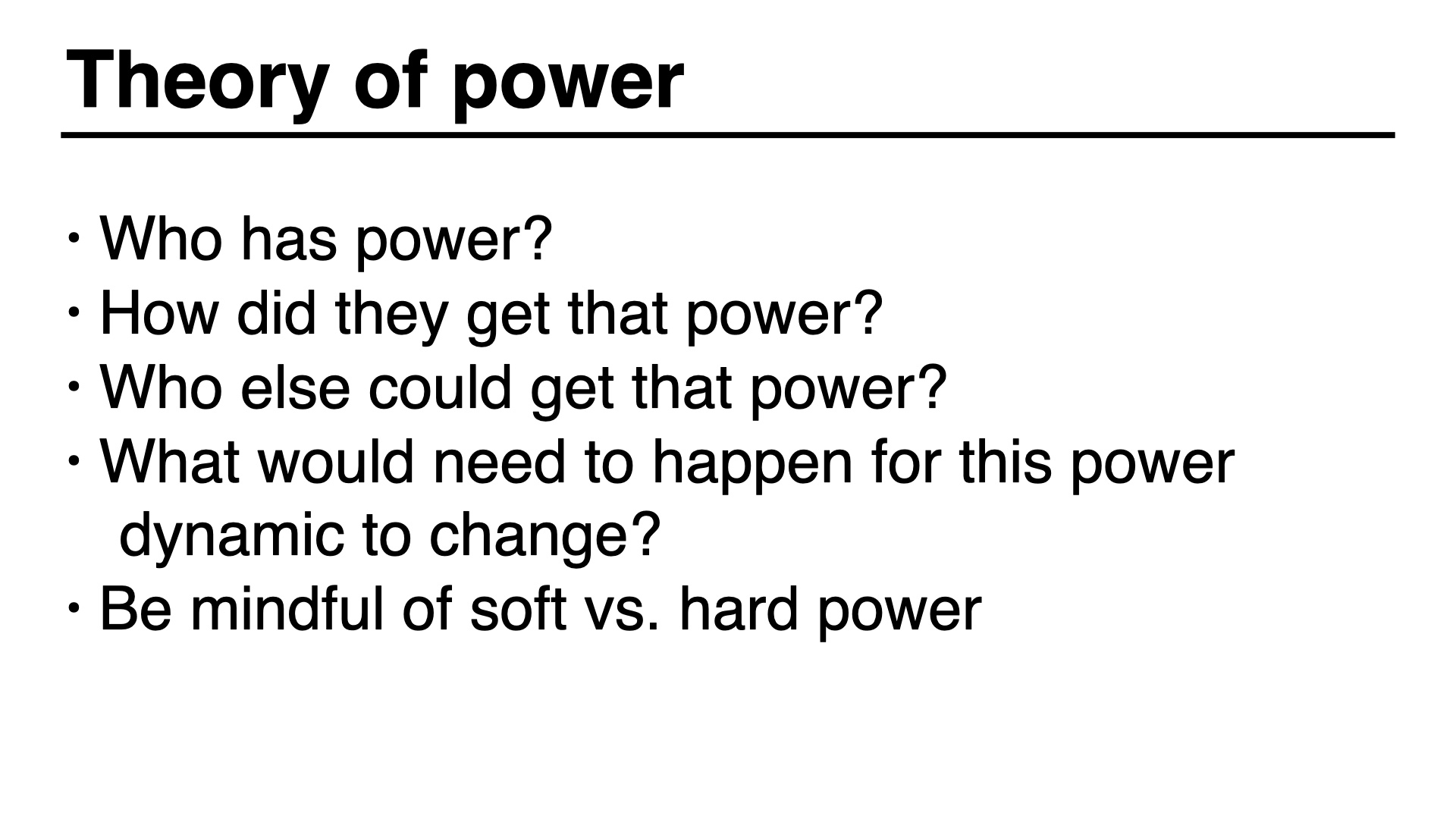
A brief digression into the theory of power, I could talk about this all day so I will try to be brief. Having a theory of power helps your group be effective, especially when you want to create change. Library workers are not always great with "seizing" power (and we rarely have it) because it's usually not integral to all of our jobs. In some of the work we do, it's certainly central, but many of the jobs in the library world are about engaging with people, managing resources for equitable distribution, fussing around with money and staff and computers, and being only part of the team which accomplishes those things. It's worth further reading if this happens to be your jam (suggestions in my notes). Taking action to make change is, in my opinion, the most effective when people have a theory of power. And in some ways, we do have power since we (somewhat) represent institutions and can speak from that community position. When I speak as the library I work for, that's like saying "the government said this" only... in more of a good way.
The second part of the equation after the political is the advocacy/action part of this. And this is where I say two things at once which conflict with each other: just doing opposition research (i.e. hate reading news articles about terrible people or reading about them on social media) or re-posting political content that you agree with is not quite the same thing as activism in most cases. At the very same time, for people for whom this is what they are able to do (for risk reasons, health reasons, mental health reasons, or ability reasons) then this is fine, optimal even.
But be clear with yourself as you move into this space: am I just raising awareness (important, but only part of the work) or am I working towards a specific outcome? Am I able to do more than this?
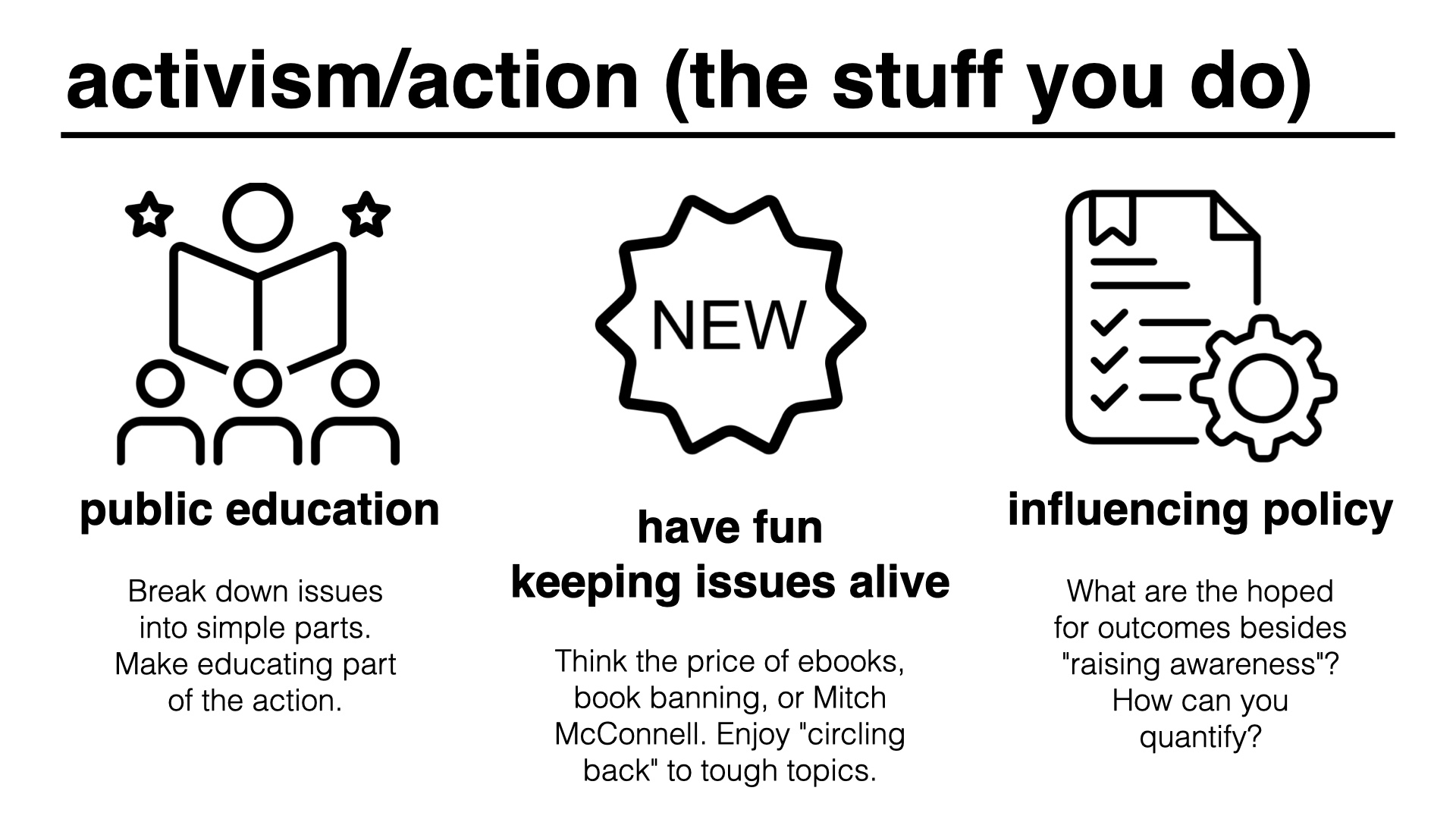
This is where more people are visibly working on things. Some of this is talking about a thing, educating people, some of this is influencing policy. I think the part we do not talk about enough is: keeping issues alive and having fun while you do it. We've all got media fatigue, fascism fatigue, terrible people doing awful things fatigue. But to show up and be joyous while the forces of evil are clearly not enjoying themselves? That's transformative.
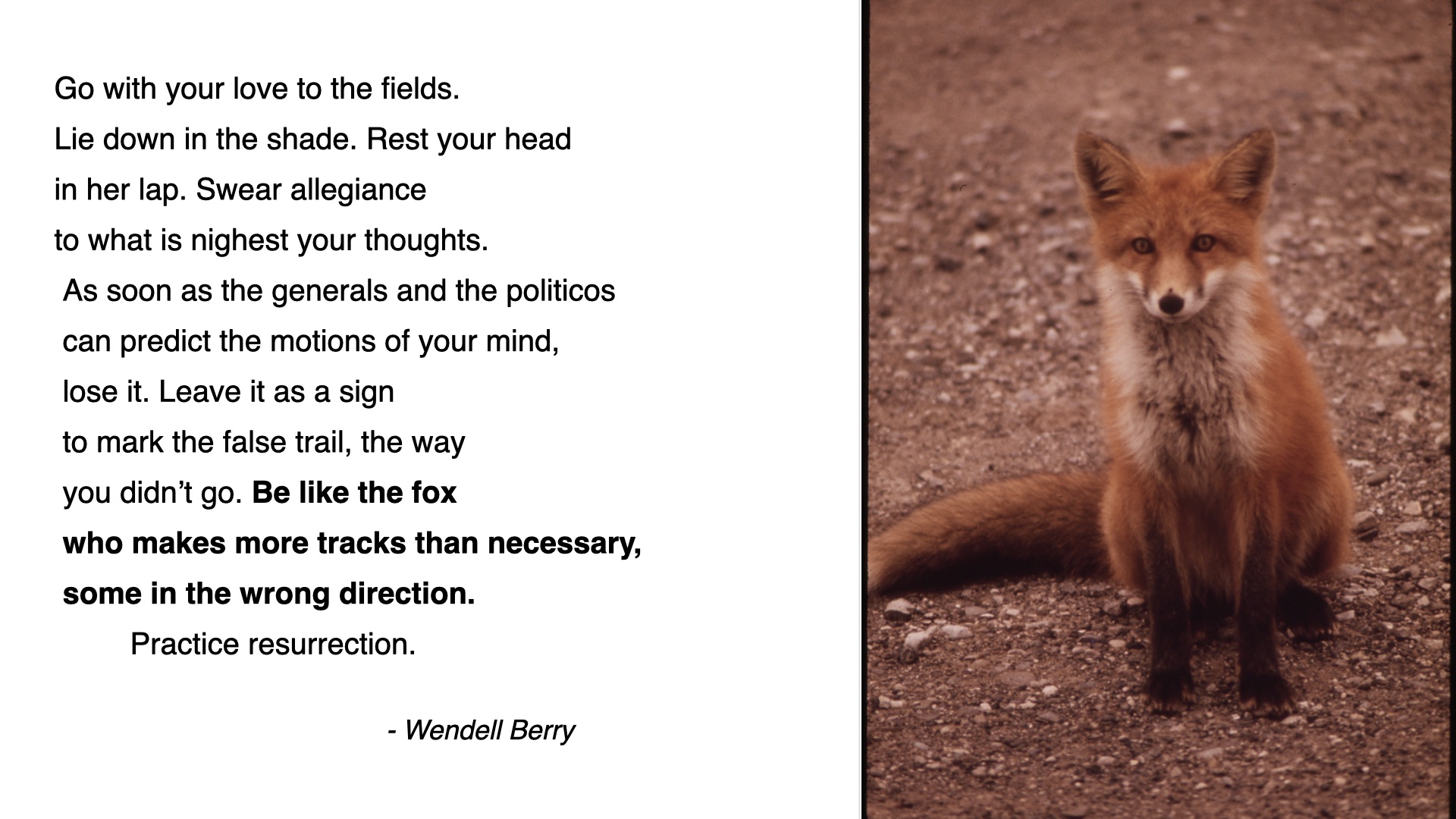
And this isn't always going to be a thing that happens out in public. We have always had a professional culture built on openness and sharing and it's not the easiest thing to move forward operating as if sharing might not be optimal, as if openness could be a liability. We lost Wendell Berry a month or so ago, so I've been re-reading some of his poems that I enjoy, especially this bit of this one. Sometimes you have to be a little opaque about what you're really up to. That's ok. And as I mentioned a bit ago, not only is "everyone going through it" as I often remind myself, but people have different levels of ability to engage for many reasons.
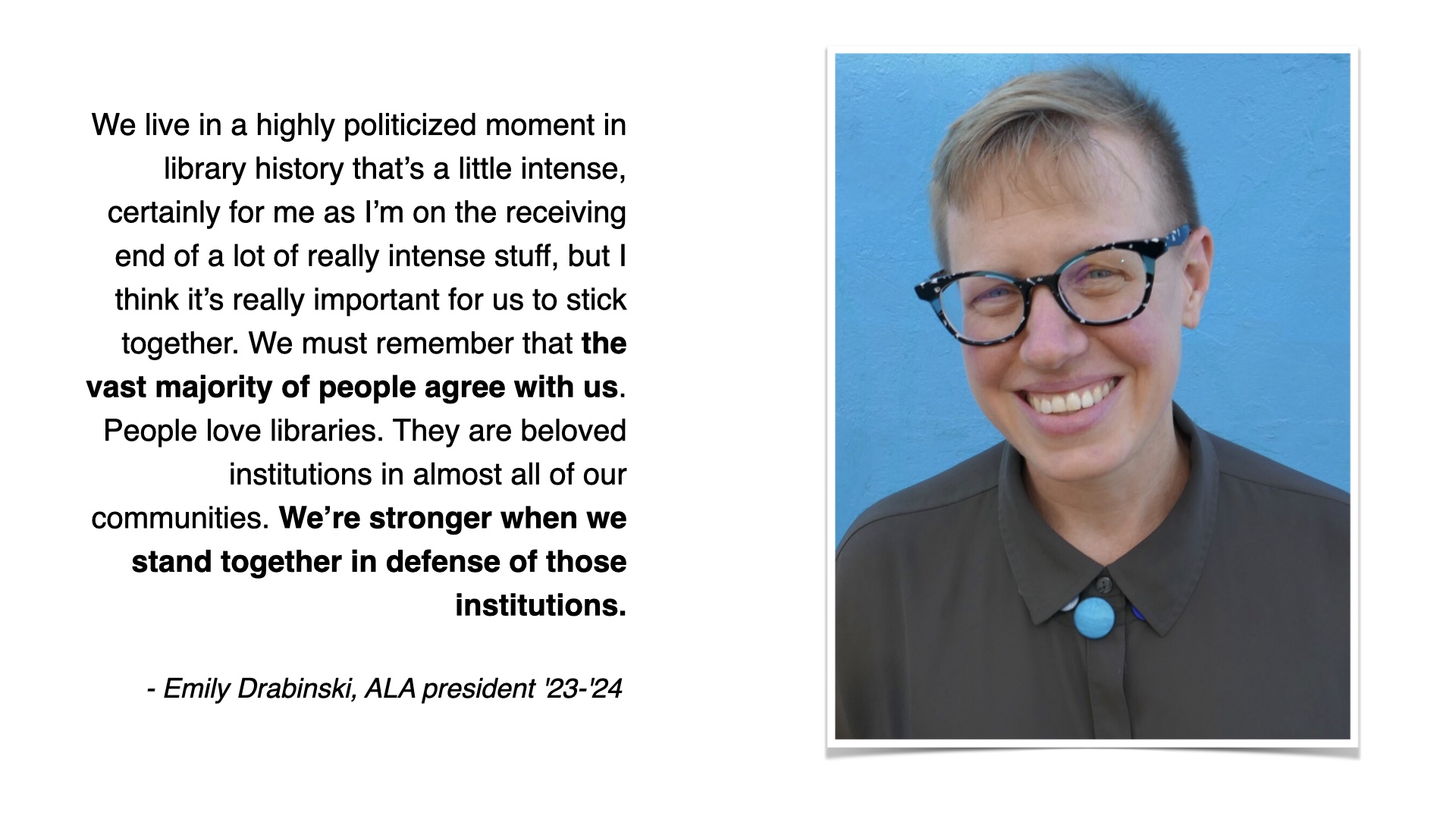
[Photo of Emily D] You know how sometimes people on social media call Zohran Mamdani their mayor, even though they live nowhere near New York City? And how people, most people, just enjoy this mayor who seems to actually love his job? He had a huge, unprecedented, group of door knockers and hype people helping get his message out. His platform was three things that I can still remember (pre-K, buses, rent). I feel that way about Emily Drabinski, former ALA president from 2023-2024. I've moved on from ALA in order to focus more on my local state library association but she really was the full package. Outspoken, up for the relentless travel and press that the job entailed, and consistently had the message that we were stronger together. A union message, sure, but also, a message that feels true. She was always elevating and promoting others, and getting the library message out to places where it hadn't been. And ALA was up for it... almost.
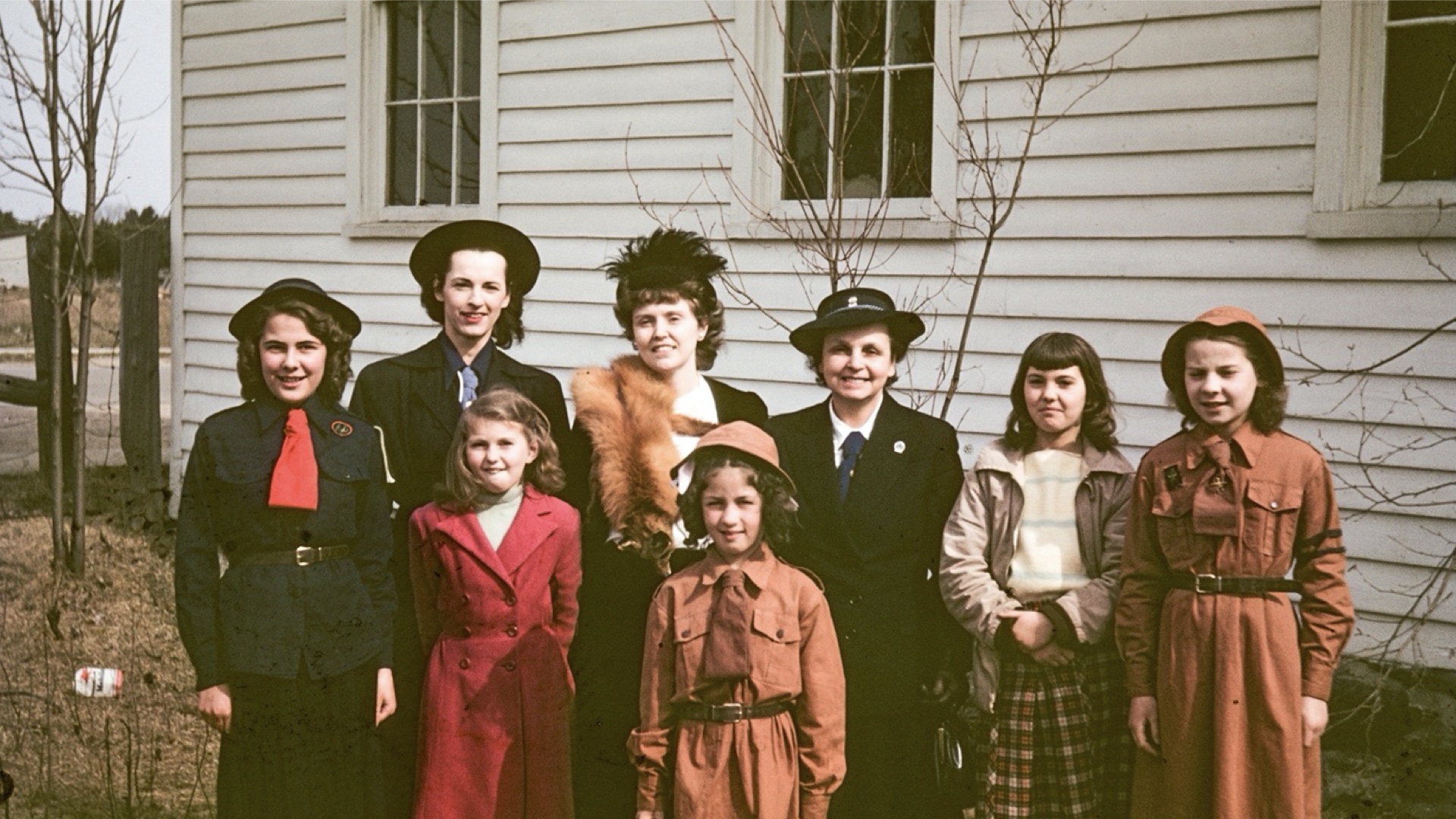
And I believe in not platforming the haters so this is a picture of some folks on Mother's Day from my job at Flickr Commons while I talk about how Moms for Liberty, a relentless group of people who pretend care about children when what they are absolutely about is "consolidating their base" (this is the useful theory of power) and getting more people on more mailing lists to get more marching orders to sow more chaos and fear. Challenging books they haven't read in libraries they've never been to. Talking to state library associations and state libraries "concerned" that ALA had a lesbian Marxist president. ALA was better at pushing back against the haters on the first issue, not so much against the ones on the second, and ultimately Emily had less support from ALA for her presidential year than she should.
A few more areas where we see this mechanism at work (by which I mean disingenuous posturing at the top leading to people actually lobbying or performing activism for topics they are poorly informed about). Transgender athletes. Immigration. Voter fraud. Don't let these people control the narrative. Work with others to create your own consensual reality to the extent that you are able.
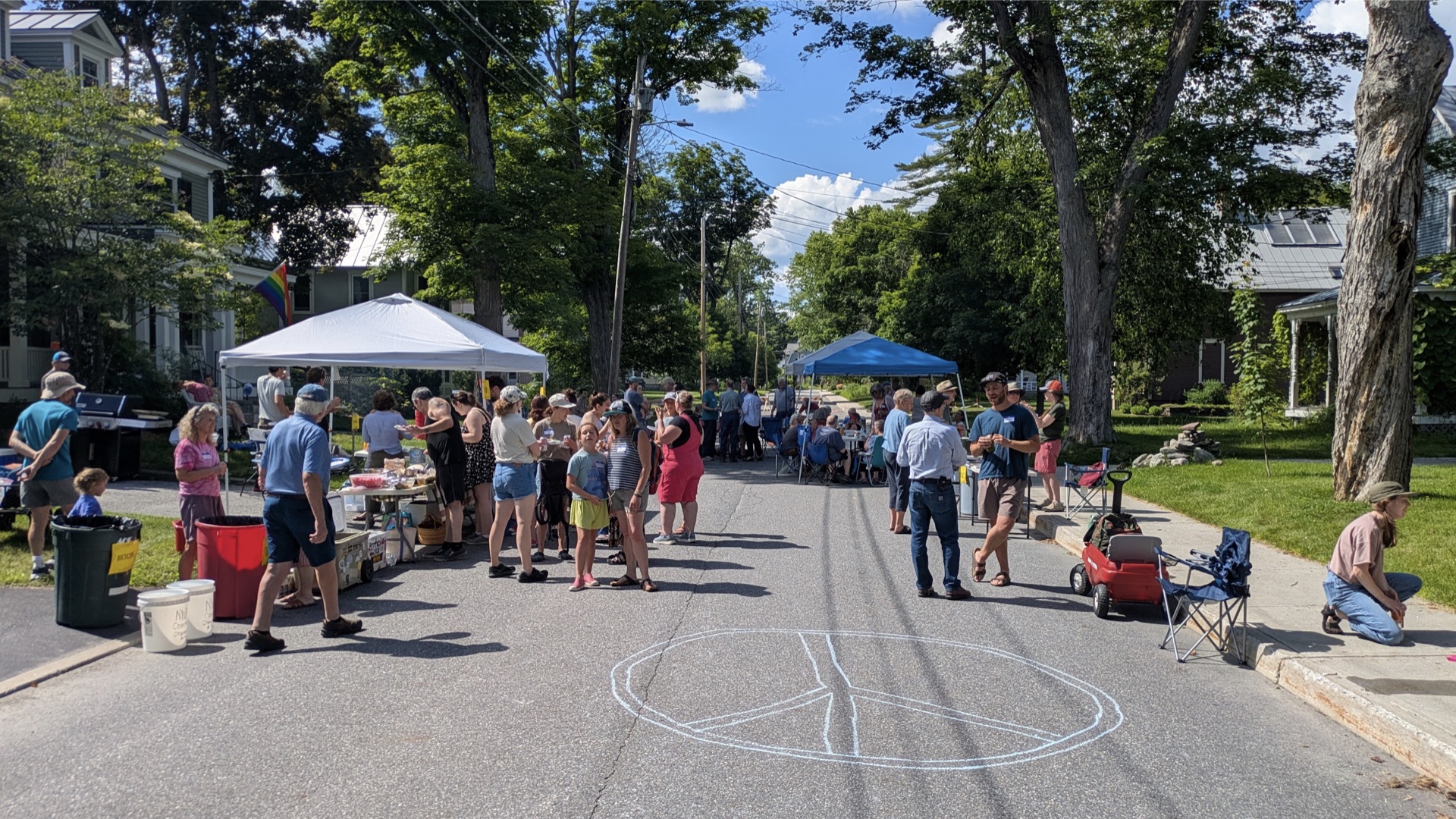
There are other ways that people work together to achieve a positive goal, whether it's in person or online. This is my neighborhood. We got a small grant from a local pedestrian advocacy group to do a block party, close off a block in the neighborhood to support bike/ped friendly interactions, have food, talk to one another. It went well. There was a small steering committee, we knew each other casually but not closely. Everyone who worked on the project had a set of discrete tasks and those tasks included planning, day of, clean up, and wrap-up. I mostly made posters and talked about it on social media. No one felt overtaxed with the amount of work they had to do. Everyone had a great time.
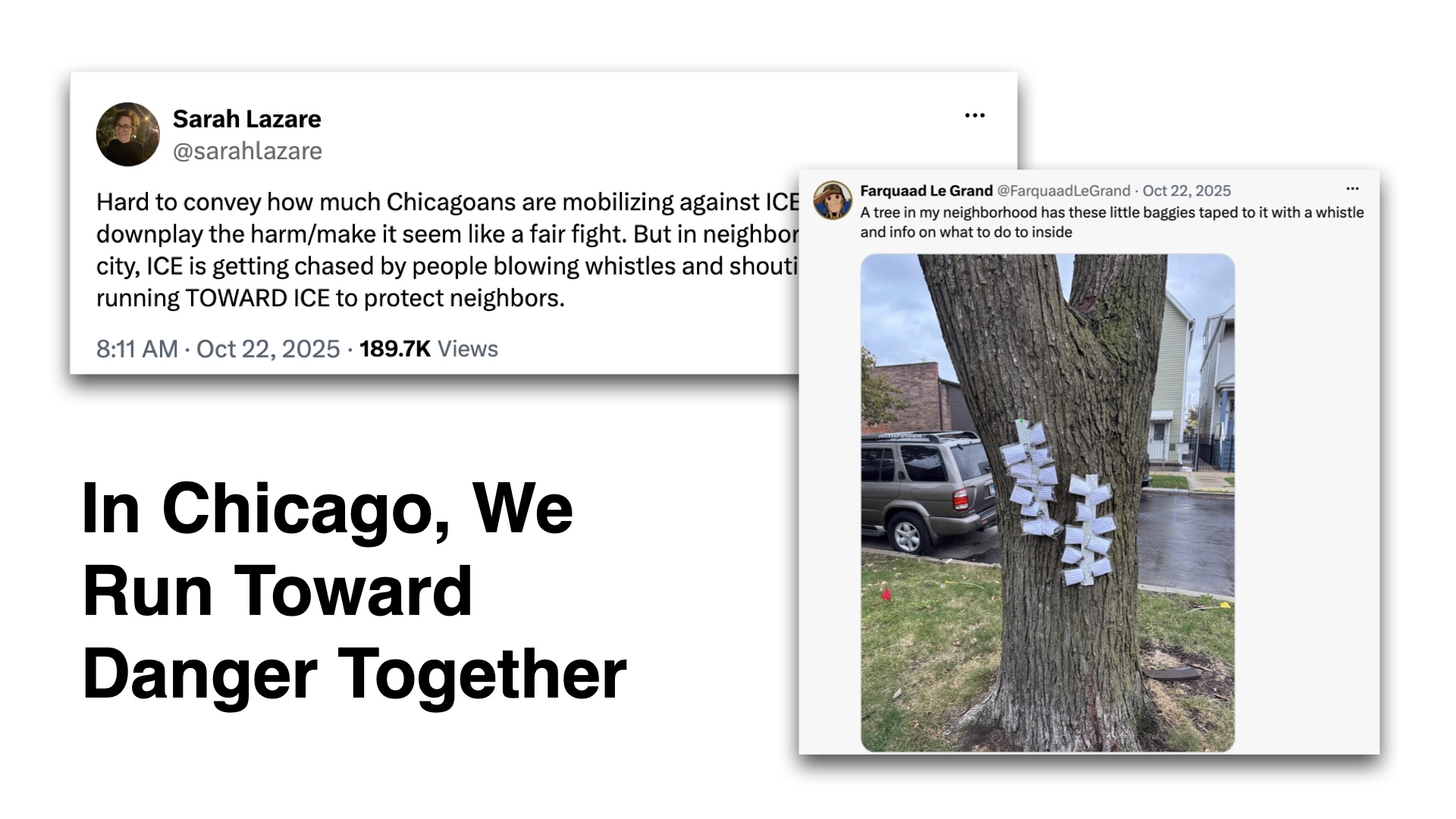
And in neighborhoods where they're dealing with something less fun than potlucks, there are community groups making and giving away free whistles and information on what to do with those whistles once you have them. And what to do when you hear a whistle. Most people doing this sort of activism are just people who are, as we say, values-aligned and want to help. When given a compartmentalized job that is specific, they step up. A big part of community engagement is helping people succeed at helping.
[logo for homosaurus, a dinosair in front of a rainbow] Here's an online collective project which I happen to really like, it's a group of queer nerds, designed to enhance broad subject term vocabularies in LGBTQIA2S+ ways. They are always looking for volunteers. This project helps make all libraries better.
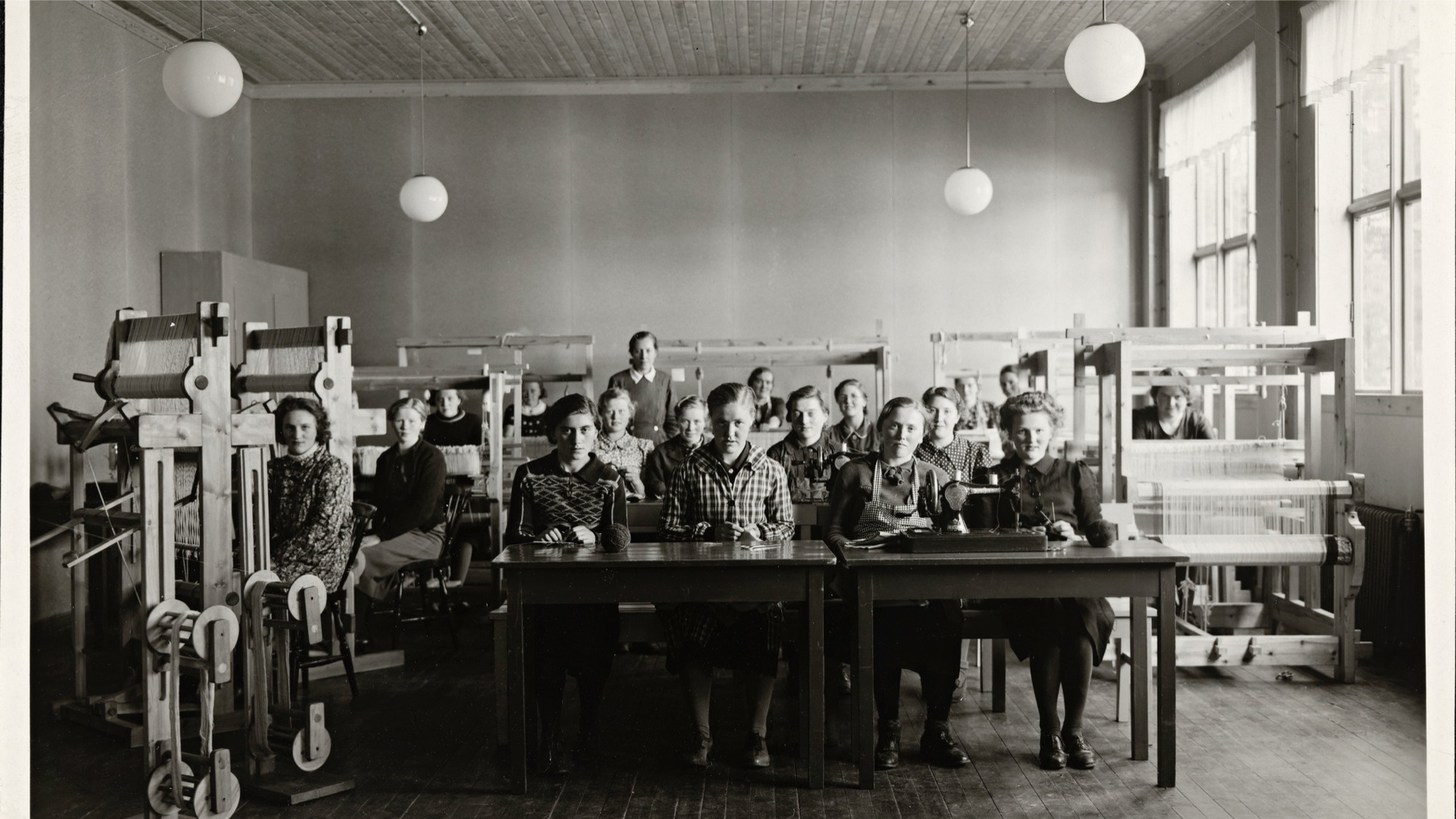
[historical photo of kids working in a room with a lot of upright looms] Another organization I'm a part of that I'm not sharing a picture of is my local activism group so here's another photo from Flickr Commons. We're not a secret exactly, people know we exist, but our exact membership is... fuzzy. For the past year or more we've met every other week, just for an hour each time, and we talk about what needs to happen to make our town "cooler" This is an arbitrary designation, but can include things like... funding the library... making it safer to cross the road downtown... getting people to volunteer on town committees... maybe funding the police slightly less. Those 45 votes the library budget won by, I feel comfortable saying that was down to our efforts and working with other groups (the senior living place, the library trustees, the people who don't really go to the library, the grumpy online people) towards one specific goal.
And the (maybe) bad news about this sort of community-building is that it often involves a lot of meetings. But... and it took me a long time to sort of learn this part... attending meetings that you want to attend is in and of itself a community-building activity. I have a regular group of people I hang out with every other Sunday
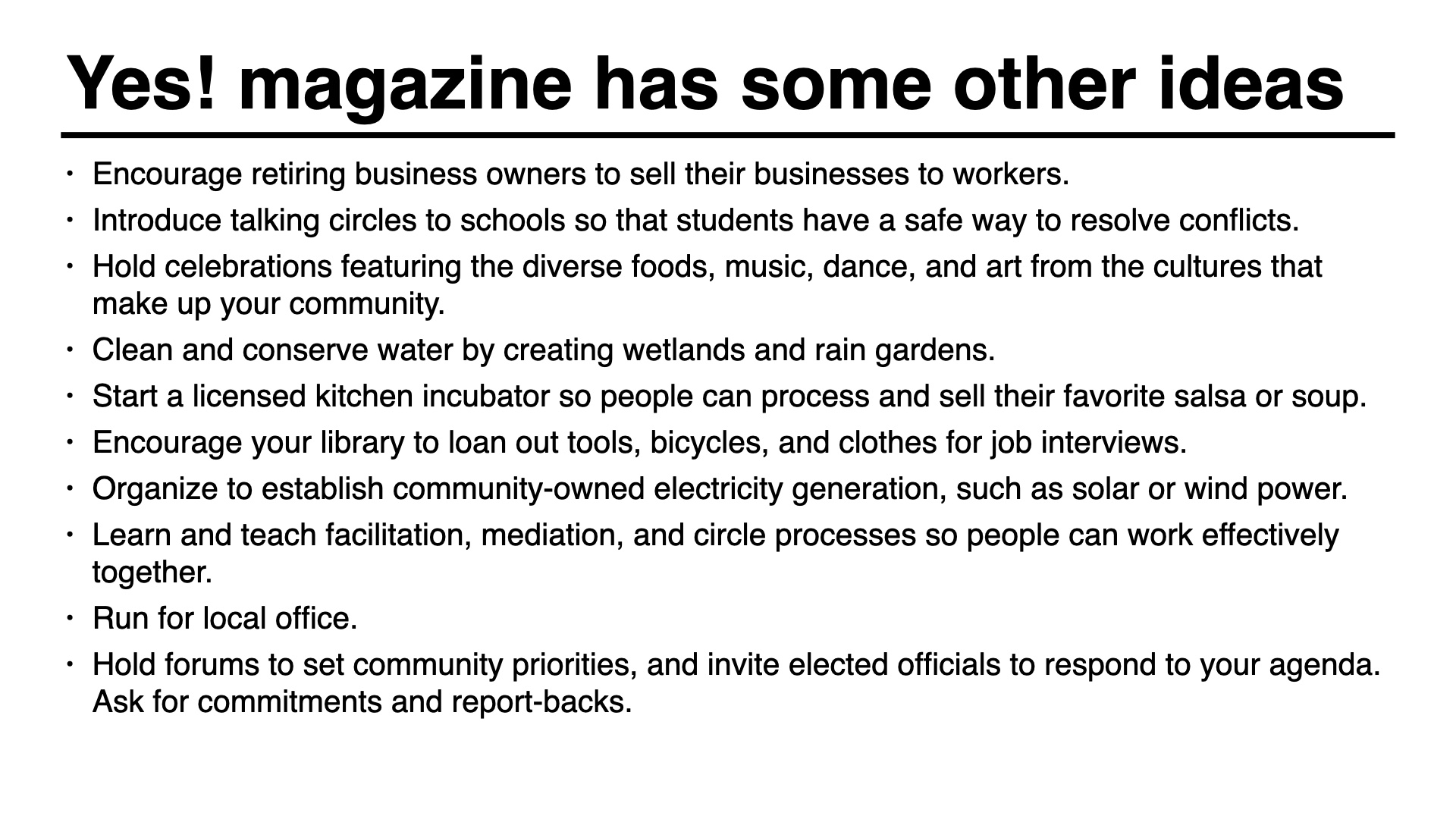
Everyone's got suggestions on the best ways to do this sort of work, this is just one list I liked from Yes Magazine's "How to Revitalize your Community and Reclaim Power" article in 2017. The important part is to identify a problem, identify the people who can work with you **on that problem** and then get to work on the problem. These do not have to be lifelong pals situations. You don't even need to agree on other things as long as you can work on this one issue without undercutting one another (and as long as you recognize the others' basic humanity - it's ok not to work with people who can't do that)
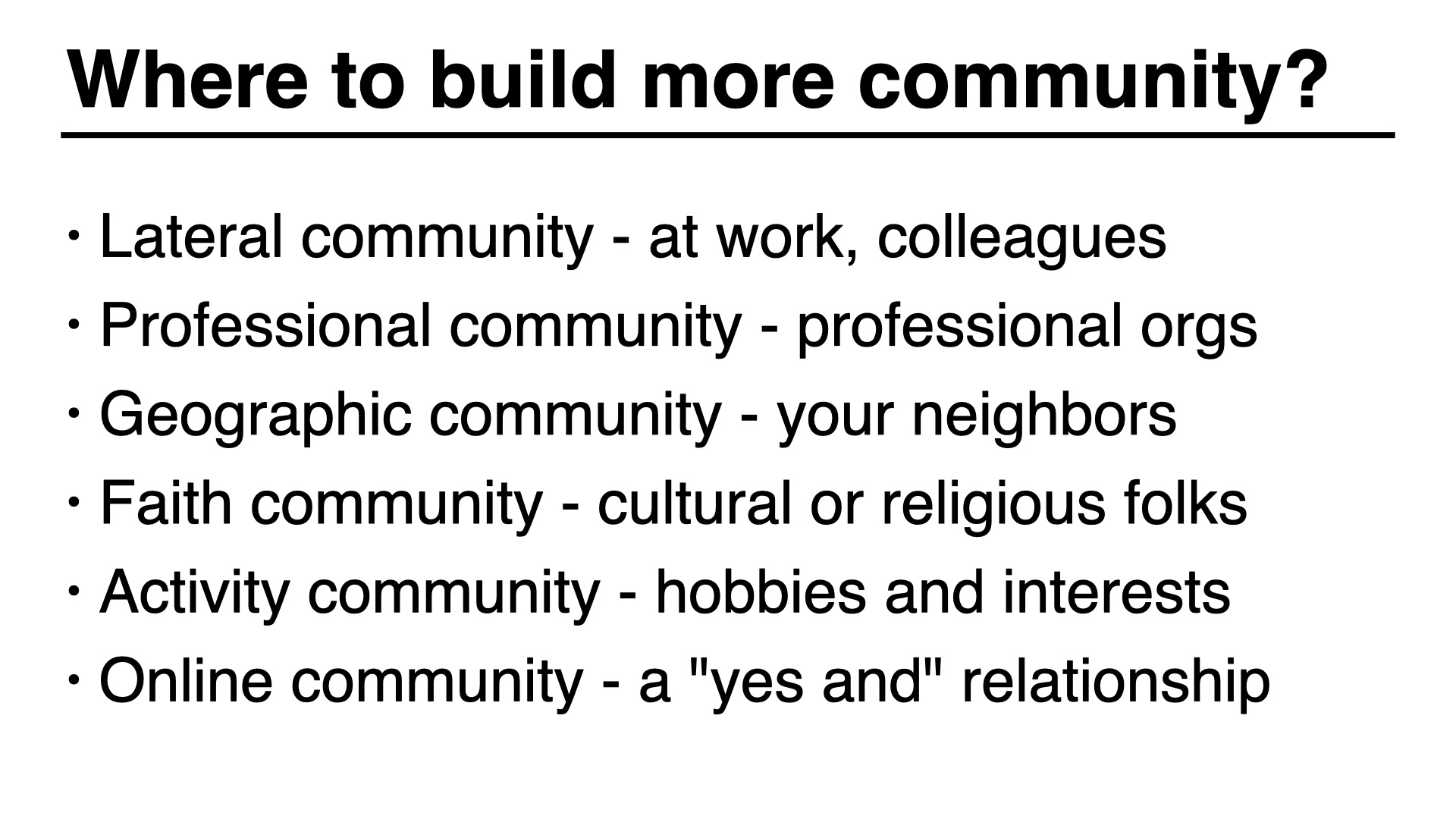
There are different places to find like-minded groups and it's okay to make one up if you don't have one already. The last one just has a caution that, again, if you have the ability to have some of your human interactions be IRL, it makes a big difference.
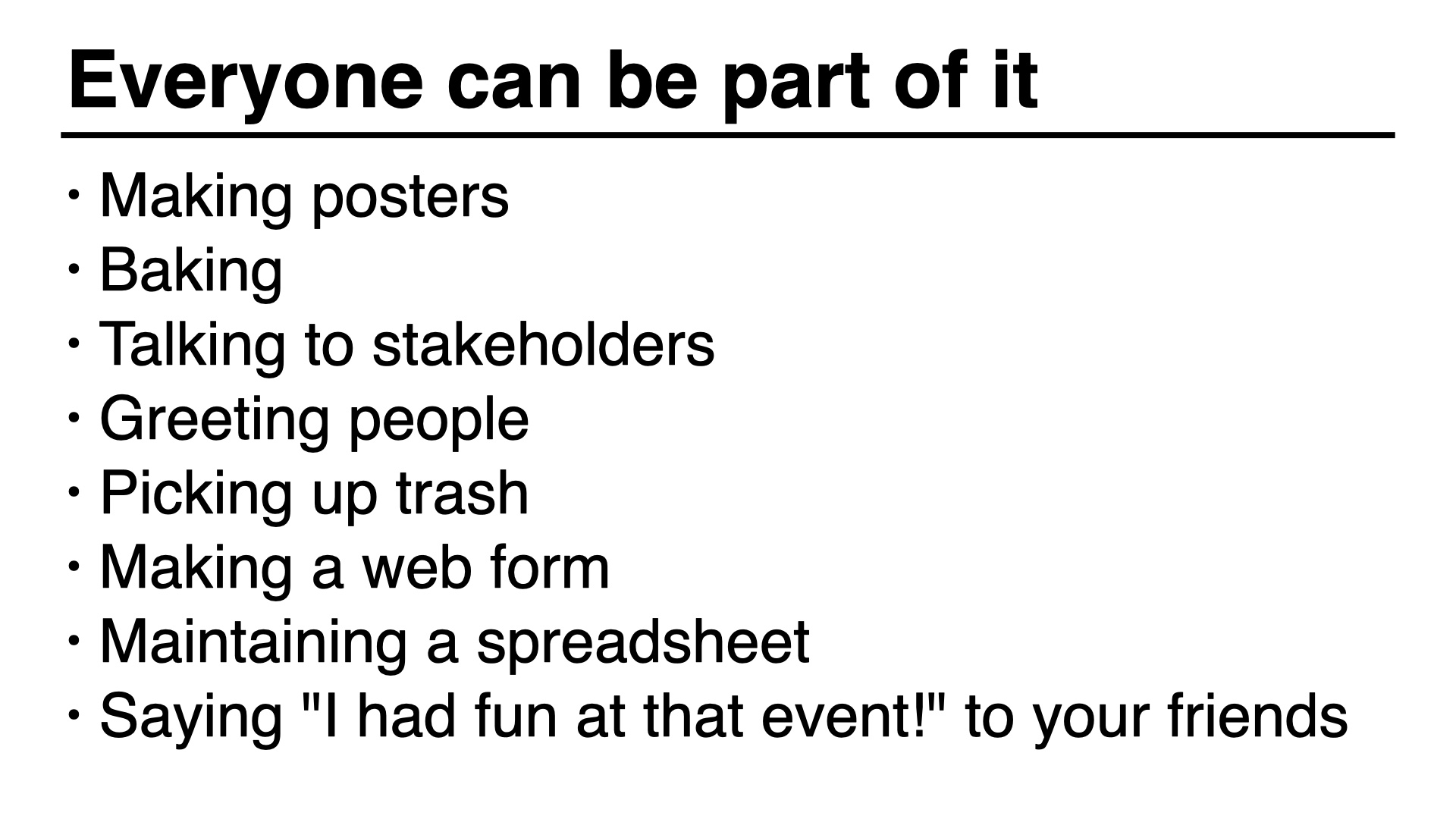
As I said earlier discrete tasks are an important part of it. Find the thing that "doesn't feel like work" to someone and they'll be happier doing it. Making signs and doing clean-up afterwards is a thing I enjoy, enough so it's a good way to contribute. Sometimes that can be taking notes, or working on a website, or being the person who brings the delicious baked goods.
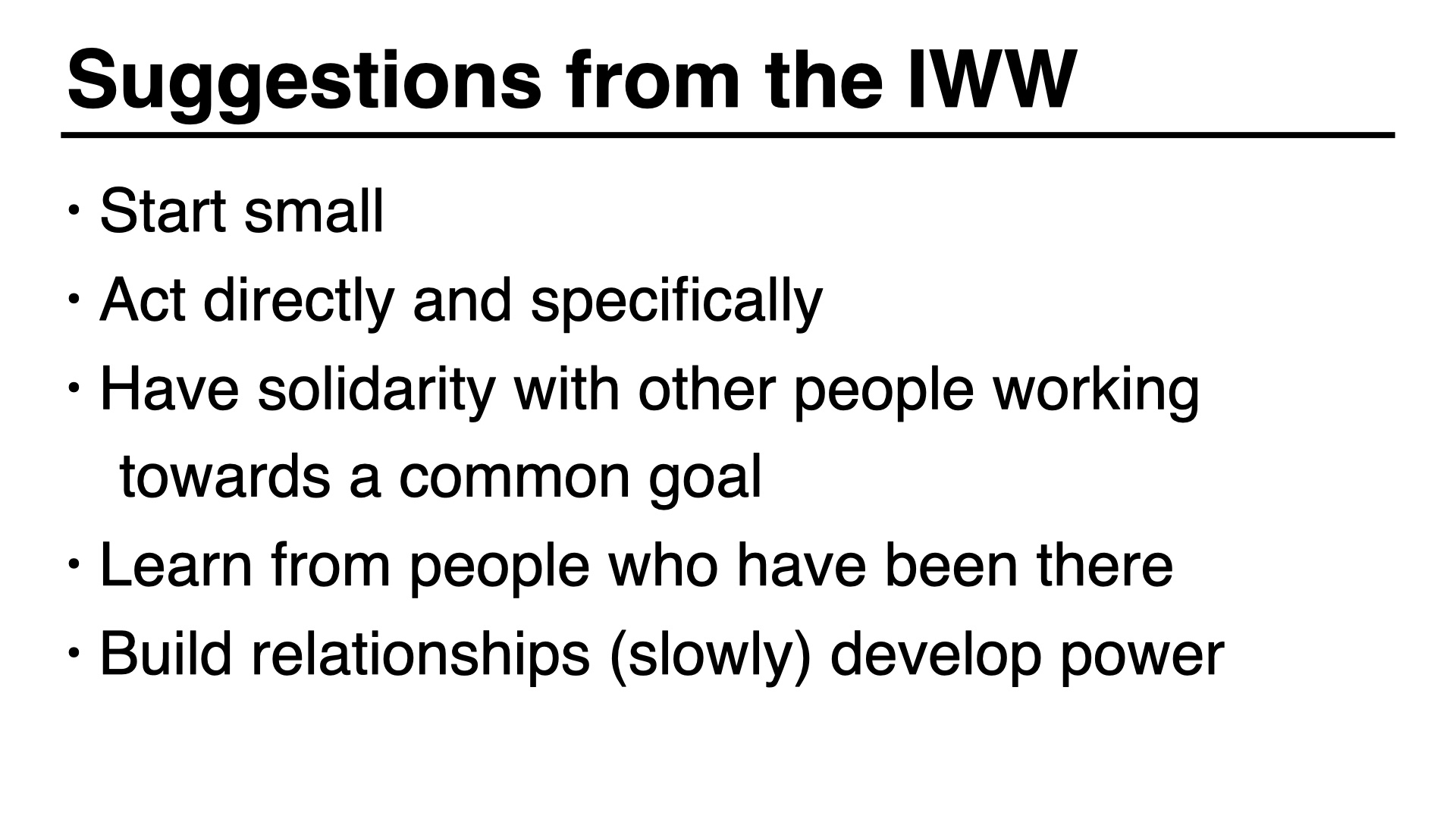
The International Workers of the World are a workers union for workers who aren't in another union. They have great resources about how to collectively organize to do thigns. Most of their goals are workplace goals but they have wide-ranging applicability. Try things. Get it wrong. Update. Try again. This was what I remember learning in library school about designing information storage and retrieval systems. Test them. Did they do what you wanted? Not quite? Tweak some things. This is true for making curry and it's true for getting like-minded people on the Selectboard.
Above all, know that this is already in your wheelhouse. We have been interoperable and distributed since forever, we just need to do that with other things we want to get accomplished
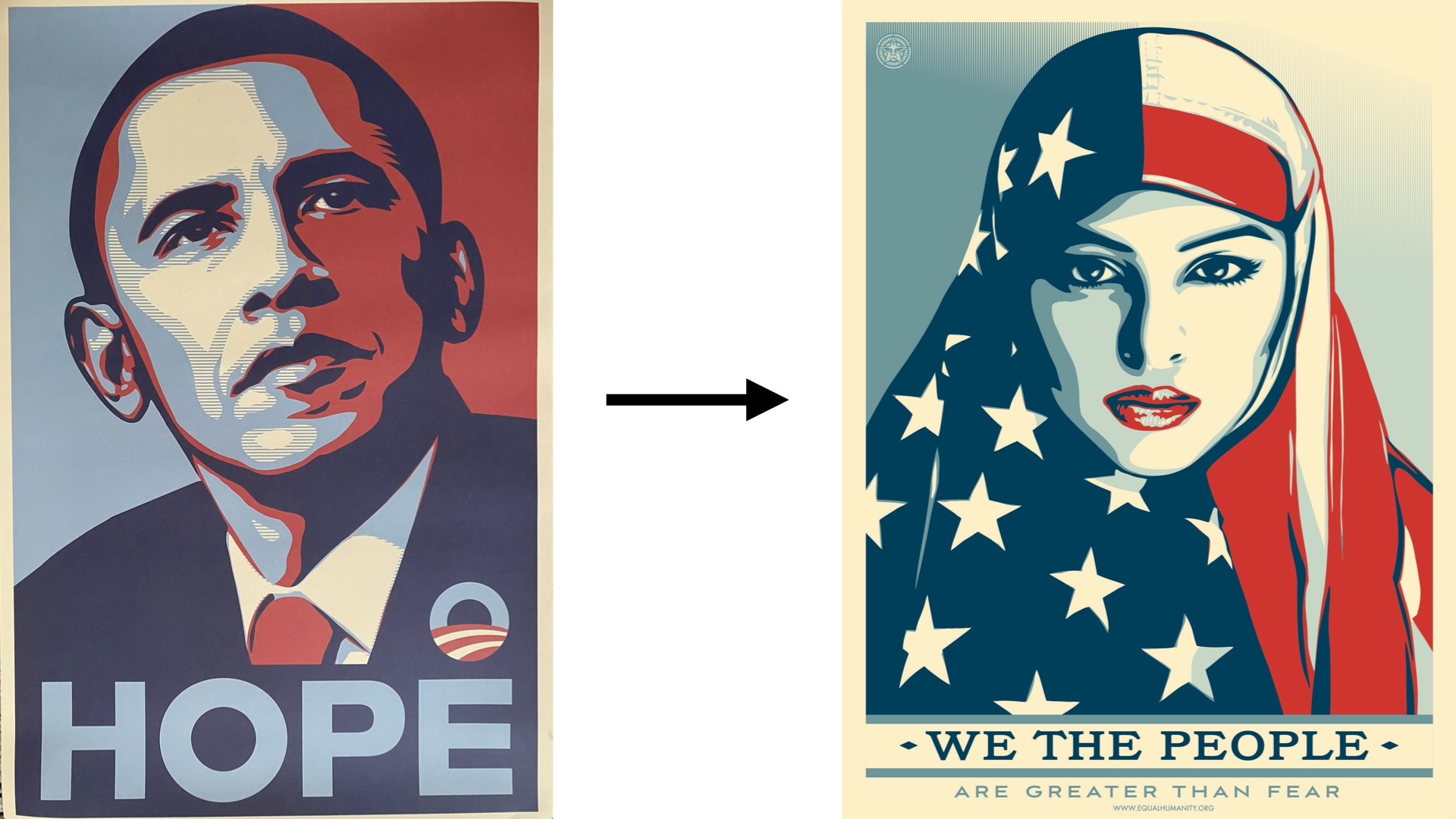
[Obama HOPE poster and We The People poster of a Muslim woman wearing an american flag as a hijab] When I was newer to being politically active as an adult, I was a blogger and got to go to the Democratic National Convention earlier in this century. There was a whole buzz about then-Senator Obama and his beginnings as a community organizer. I was a lot newer to political activities and I wasn't even sure I knew what that job WAS.... And now, with the co-ordination options of the internet and the ability to more easily find like minded people, we're able to rise to the challenges we've got before us. We are stronger together. Thank you for having me.
Thank you